
Aircraft Applications: Where Each Core Material Goes
| Aircraft Zone | Specific Components |
| Radomes | Nose radomes, antenna fairings (excellent microwave transparency) |
| Flight Control Surfaces | Ailerons, rudders, elevators, flaps |
| Wing Structures | Leading edges, trailing edges, access panels |
| Floor Panels | High-load passenger cabin floors |
| Interior Panels | Sidewalls, ceilings, galleys, partitions |
| Helicopter Structures | Rotor blades, access doors |
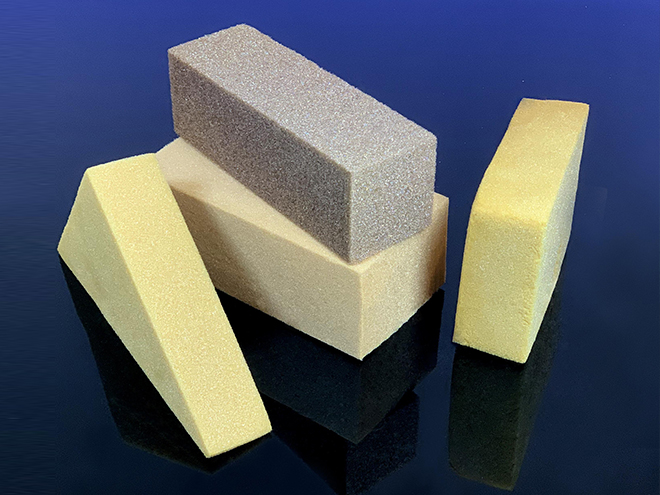
| Aircraft Zone | Specific Components |
| Engine Nacelles | Thermal insulation blankets, firewalls |
| Engine Compartments | Heat shields around turbine sections |
| Wing Leading Edges | Thermal protection near engine bleed air ducts |
| APU Compartments | Auxiliary Power Unit thermal barriers |
| Radome Support | Where thermal + structural + dielectric properties converge |
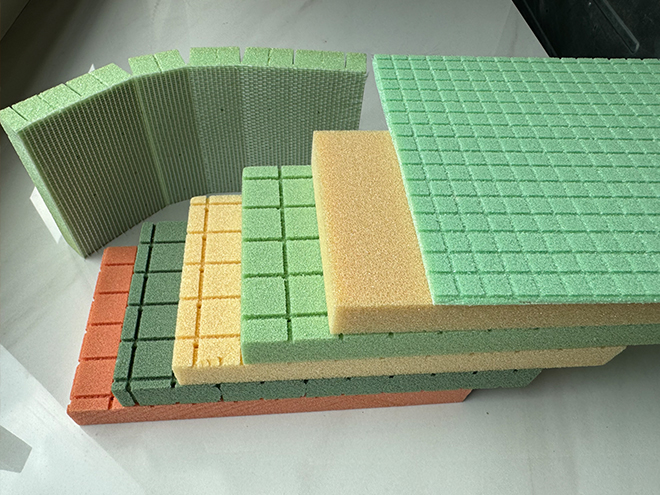
| Aircraft Zone | Specific Components |
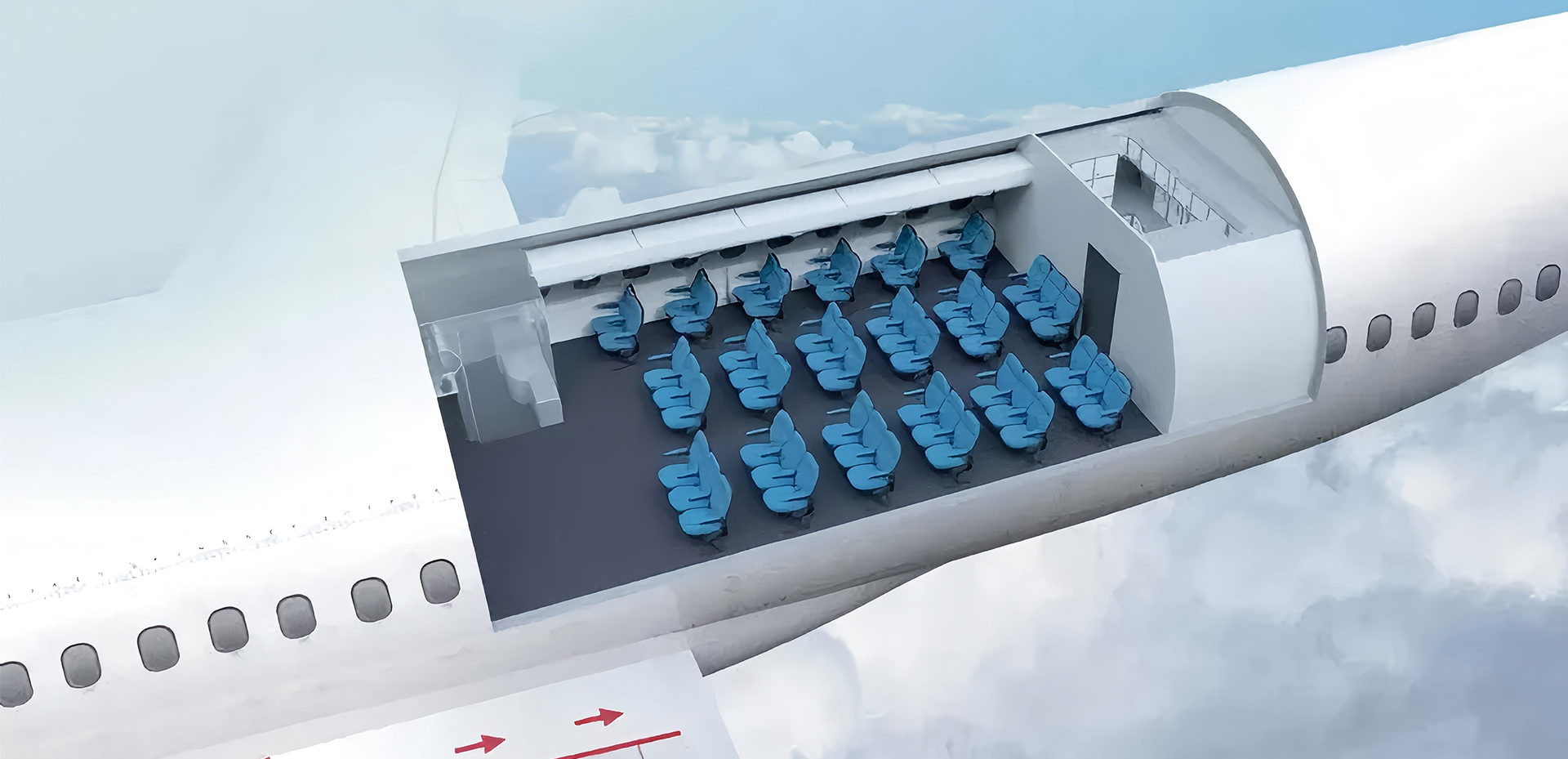
| Cabin Interiors | Sidewall panels, ceiling panels, lavatory partitions |
| Flooring | Passenger cabin floors, cargo compartment floors |
| Galleys & Lavatories | Galley cart panels, lavatory wall structures |
| Cargo Liners | Impact-resistant cargo bay liners |
| Parameter | PVC Foam | PI Foam | Aramid Honeycomb |
| Density Range | 40–300 kg/m³ | 5–200 kg/m³ | 30–100 kg/m³ |
| Continuous Service Temp | <120°C | Up to 400°C | Up to 180°C |
| Specific Strength | Moderate | High (rigid foam) | Highest |
| Thermal Conductivity | Moderate | 0.02–0.04 W/m·K | Moderate |
| Dielectric / Wave-Transparent | Tunable | >95% in X-band (rigid grades) | Excellent |
| Flame Retardancy | High grades available | Inherent (LOI >42%) | Inherent (self-extinguishing) |
| Compressive Strength | 1–3 MPa | Up to 6.58 MPa (rigid grades) | Up to 12 MPa |
| Moisture Resistance | Excellent (closed-cell) | Excellent | Good (requires edge sealing) |
| Processing Cost | Lowest | High | Very High |
| Compatible Processes | Infusion, Prepreg, RTM | Prepreg, Thermal Foaming | Prepreg, Film Adhesive Bonding |
| If your component is... | Recommended | Because |
| Cabin interior, floor, cargo liner | PVC Foam | Cost-effective, moisture-resistant, sufficient structural performance |
| Engine nacelle, firewall, heat shield | PI Foam | Extreme 400°C stability, ultra-low thermal conductivity |
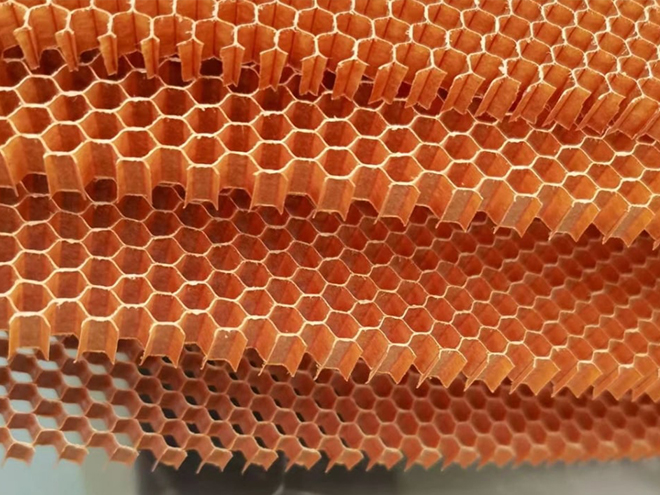
| Radome, aileron, rudder, flap | Aramid Honeycomb | Highest specific strength, self-extinguishing, excellent dielectric properties |
| Radar-absorbing / stealth structure | PI Foam | Tunable dielectric, functionalizable with fillers |
| High-load floor panel | Aramid Honeycomb | Highest compressive strength to weight |
| Layer | Material | Function |
| Top Skin | Carbon or Fiberglass Fabric | Carries tensile/compressive loads, resists impact, provides surface finish |
| Core | PVC Foam / PI Foam / Aramid Honeycomb | Transfers shear loads, provides thickness and buckling resistance at minimum weight |
| Bottom Skin | Carbon or Fiberglass Fabric | Carries tensile/compressive loads, resists impact |
| Aircraft Zone | Recommended Skin | Recommended Core | Rationale |
| Wing Skins | Carbon Fabric | Aramid Honeycomb | Maximum specific strength and stiffness |
| Fuselage Panels | Carbon Fabric | Aramid Honeycomb / PVC Foam | Stiffness-driven with cost optimization |
| Radome | Fiberglass Fabric | Aramid Honeycomb | Radar transparency from both skin and core |
| Flight Control Surfaces | Carbon Fabric | Aramid Honeycomb | Ultralight, high stiffness for rapid actuation |
| Engine Nacelles | Fiberglass or Carbon | PI Foam | Thermal stability + insulation |
| Cabin Interiors | Fiberglass | PVC Foam | Cost-effective + FST-compliant |
| Floor Panels | Carbon or Fiberglass | Aramid Honeycomb / PVC Foam | High compressive strength with load-specific optimization |
| Cargo Liners | Fiberglass | PVC Foam | Moisture resistance + impact protection |
| Stealth / Radar-Absorbing Structures | Carbon (with tailored conductivity) | PI Foam (modified) | Controlled dielectric properties for signal attenuation |

Why Specify Fabrics with Your Core Materials?
Matched material systems
Fabrics and cores are engineered for mutual compatibility (resin flow, thermal expansion, bond strength)
Single-source accountability
One supplier for the entire sandwich, reducing interface risks
Simplified qualification
Complete material data packages cover skin-core combinations, not just individual materials
Process optimization
Our technical team provides guidance for infusion, prepreg, and RTM processing with both fabrics and cores
Why Choose Our Complete Portfolio?

Simplify procurement
source all three core families from a single qualified partner

Optimize every zone
match the right material to every structural requirement

Reduce supply chain risk
local manufacturing, shorter lead times, responsive technical support

Full engineering support
material selection, process optimization, FST testing, and certification documentation
Frequently Asked Questions About Aerospace Core Materials
-
What is the difference between aramid honeycomb and PVC foam?
Aramid honeycomb provides the highest specific strength and stiffness, making it ideal for primary aircraft structures and flight control surfaces. PVC foam offers an excellent balance of weight, cost, moisture resistance, and processability, making it the preferred solution for aircraft interiors and semi-structural components.
-
When should PI foam be used instead of aramid honeycomb?
PI foam is recommended whenever components are exposed to sustained high temperatures or require exceptional thermal insulation, such as engine nacelles, APU compartments, firewalls, and thermal protection systems.
-
Which core material is best for aircraft radomes?
Aramid honeycomb is the most common choice because of its excellent dielectric properties, low weight, and high structural efficiency. In specialized applications requiring additional thermal resistance, PI foam may also be considered.
-
Can PVC foam be used in aerospace interiors?
Yes. Fire-retardant grades of PVC foam are widely used in aircraft cabin interiors, floor panels, cargo liners, galleys, and lavatory structures where moisture resistance, lightweight construction, and cost efficiency are important.
-
Which manufacturing processes are compatible with these core materials?
PVC foam is commonly processed using vacuum infusion, RTM, and prepreg technologies. Aramid honeycomb is typically bonded using prepreg laminates and film adhesives. PI foam is generally used with prepreg systems and thermal processing methods depending on the application.