


Industrial Sandwich Panel Applications


Modular Structures & Technical Panels
PET and PVC foam cores are used in lightweight modular and prefabricated sandwich structures.
Typical applications include:
Modular technical rooms, Equipment shelters, Communication shelters, Portable structures, Containerized equipment rooms, Containerized equipment rooms
Closed-cell foam cores provide structural support while resisting moisture, rot and corrosion.
PET foam is often selected where weight, stiffness and cost need to be balanced, while PVC foam is suitable for structures requiring higher mechanical performance or more demanding service conditions.
These materials help manufacturers produce lightweight industrial panels for modular and transportable structures.

Industrial Doors, Partitions & Large Flat Panels
PP honeycomb is widely used where very low weight and cost-effective large-panel production are important.
Typical applications include:
Industrial doors and gates
Lightweight partitions
Wall panels
Access panels
Furniture and cabinet panels
General plywood-replacement panels
PP honeycomb provides low weight, moisture resistance and good stiffness-to-weight performance for large, relatively flat sandwich structures.
It is suitable for many PP honeycomb industrial panels where low weight, panel size and production efficiency are important.
Surface options such as non-woven or reinforced fabric facings are available to support bonding with different panel skins.
Cleanroom, Wet-Room & Prefabricated Panels
PP honeycomb and selected foam cores are also used in lightweight panel systems for controlled or moisture-exposed environments.
Typical applications include:
Cleanroom wall panels
Wet-room panels
Prefabricated bathroom modules
Ceiling panels
Lightweight internal partitions
Material selection should consider panel skins, bonding system, fire requirements, moisture exposure and required mechanical performance.
Where fire, smoke or specific cleanroom requirements apply, compliance should be verified for the complete panel system according to the applicable project standard.

| Application | Typical Skins | Core Options | Main Requirements |
| Equipment housings | FRP / composite laminate | PET / PVC | Stiffness, low weight, machinability |
| Machinery covers | FRP / composite laminate | PET / PVC | Lightweight, durability |
| Modular shelters | FRP / metal skins | PET / PVC | Stiffness, moisture resistance, insulation |
| Industrial doors | FRP / HPL / metal skins | PP honeycomb / PET | Low weight, large panel size |
| Partitions & wall panels | FRP / decorative skins | PP honeycomb / PET | Lightweight, flatness, cost efficiency |
| Wet-room panels | FRP / moisture-resistant skins | PP honeycomb / selected foam | Moisture resistance |
| Material | Best Suited For | Panel Geometry | Local Load Capability | Machining | Relative Cost |
| PET Foam Core | General industrial sandwich panels, equipment housings and modular structures | Flat / curved | Medium | Excellent | $$ |
| PVC Foam Core | Higher-load panels, reinforced housings and demanding structures | Flat / curved / complex | Medium–High | Excellent | $$$ |
| PP Honeycomb Core | Doors, partitions and large flat panels | Mainly flat | Low–Medium* | Limited | $ |
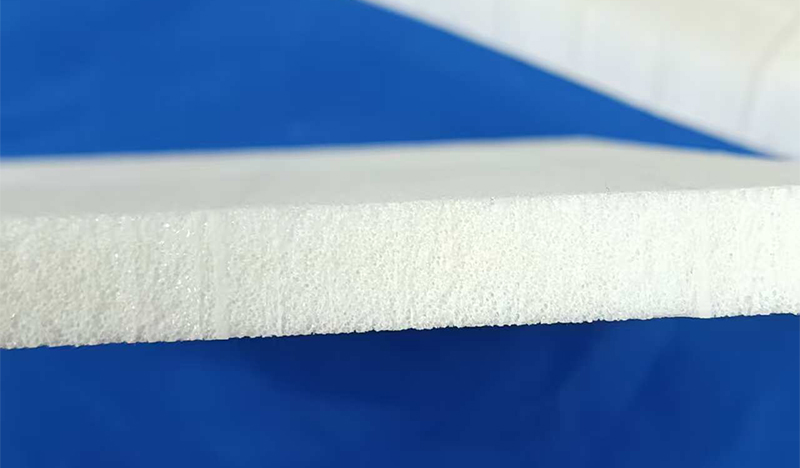
Choose PET Foam When
Continuous support beneath the skin is required
Machining or profiling is needed
A balance of stiffness, weight and cost is important
Flat or curved structural panels are required
Thermoplastic foam construction is preferred
PET foam is a practical choice for general industrial sandwich panels and lightweight structural applications.

Choose PVC Foam When
Higher structural performance is required
The panel carries higher or concentrated loads
Moisture resistance is important
Complex shaping or machining is required
More demanding mechanical performance is needed
PVC foam is suitable for higher-performance PVC foam industrial panels and reinforced composite structures.

Choose PP Honeycomb When
Minimum weight is a priority
Panels are large and relatively flat
Cost-effective volume production is required
Moisture resistance is important
Extensive core machining is not required
PP honeycomb is particularly suitable for doors, partitions and other lightweight industrial panels.
Design & Processing Considerations

Custom Processing
Why JLon?

PET foam, PVC foam and PP honeycomb from one supplier

Multiple densities and thicknesses

Grooving, perforation and CNC processing

Standard sheets and customized components

Support for different panel constructions

Sample and technical document support

Stable supply for industrial production

Core material selection support based on application requirements
Frequently Asked Questions About Industrial Core Materials
-
Which core materials are commonly used in industrial sandwich panels?
PET foam, PVC foam and PP honeycomb are commonly used as industrial core materials for lightweight sandwich structures.
The appropriate material depends on panel size, structural load, geometry, processing method, moisture exposure, fastening requirements and cost target.
-
How do I choose between PET foam, PVC foam and PP honeycomb?
PET foam is suitable for general industrial sandwich panels requiring good machinability and a practical balance of stiffness, weight and cost.
PVC foam is preferred for applications requiring higher mechanical performance, low water absorption or more demanding structural performance.
PP honeycomb is suitable for large, relatively flat lightweight industrial panels where minimum weight and cost-efficient production are important.
Final material selection should be based on the complete sandwich panel design, including skins, bonding system, loads and manufacturing process.
-
When should PET foam be used in industrial panels?
PET foam is suitable for equipment housings, machinery covers, modular structures and general structural sandwich panels.
It provides continuous support beneath the panel skins, good machinability and a practical balance between mechanical performance and cost, making it suitable for many PET foam industrial panels.
-
When should PVC foam be used in industrial panels?
PVC foam is suitable where higher mechanical performance, moisture resistance or improved local load resistance is required.
Typical applications include reinforced equipment housings, structural enclosure panels and other higher-performance PVC foam industrial panels.
Areas with concentrated loads may require local reinforcement or high-density inserts.
-
When should PP honeycomb be used in industrial panels?
PP honeycomb is suitable for industrial doors, partitions, wall panels, access panels and other large, relatively flat sandwich structures.
Its very low weight, moisture resistance and cost efficiency make it suitable for many PP honeycomb industrial panels, particularly where extensive core machining is not required.
-
Can PET foam, PVC foam or PP honeycomb replace plywood?
In some sandwich panel applications, lightweight core materials can replace plywood to reduce weight and avoid moisture-related rot.
PET foam and PP honeycomb are commonly considered for lightweight plywood-replacement panel structures, while PVC foam can be used where higher structural performance is required.
The final panel construction should be verified according to required loads, fastening methods and skin materials.
-
Can bolts, hinges or equipment be mounted directly to sandwich core materials?
Concentrated loads require careful panel design.
Depending on the load and core material, high-density inserts, local reinforcement or additional skin reinforcement may be required around bolts, hinges, handles and equipment mounting points.
-
Can JLon process industrial core materials according to drawings?
Yes.
Jloncell provides cut-to-size sheets, CNC-machined parts, custom shapes, grooving, perforation and drawing-based core components.
Customers can provide PDF, DXF or DWG drawings for manufacturing review.