



Table of Contents
The development of electric vehicles (EVs) has increased demand for advanced thermal insulation materials that combine lightweight construction, temperature resistance, electrical insulation and design flexibility. As battery packs become more compact and energy density increases, thermal management has become an essential consideration in battery system engineering.
Polyimide foam is a high-performance polymeric foam that combines thermal stability, low density and thermal insulation properties. Unlike conventional polymer foams, selected polyimide foam grades can withstand elevated temperatures while accommodating complex insulation geometries.
As a supplier of advanced thermal insulation materials, JLON offers flexible and rigid polyimide foam for demanding engineering applications. These materials can be evaluated for electric vehicle battery packs, battery energy storage systems, electrical enclosures and other high-temperature environments.
Understanding the characteristics of different insulation materials is essential for battery manufacturers, automotive component suppliers and engineers developing new thermal management solutions.
Thermal Insulation Challenges in EV Battery Packs
Electric vehicle battery packs contain interconnected battery cells, modules, cooling systems, electrical connections and structural components. Each component has different thermal and mechanical requirements.
An effective battery thermal management system must balance heat dissipation during normal operation with thermal isolation in areas where additional protection is required.
Temperature Control During Normal Operation
Lithium-ion batteries operate most efficiently within a manufacturer-defined temperature range. Excessive temperatures can accelerate battery degradation, while low temperatures can reduce charging efficiency and available power.
Thermal insulation materials can help reduce unwanted heat transfer between the battery pack and its surrounding environment.
However, insulation must be integrated carefully with liquid cooling plates, air cooling systems and other heat dissipation structures to avoid excessive heat accumulation.
Thermal Protection During Abnormal Conditions
Electrical faults, mechanical damage and internal short circuits may generate localized high temperatures within a battery system.
High-temperature insulation materials can contribute to thermal isolation between sensitive components. Their effectiveness depends on material thickness, installation geometry, exposure conditions and the overall protection system.
Thermal Insulation and Thermal Runaway Protection
Thermal insulation primarily reduces heat transfer between components. Thermal runaway protection may additionally require resistance to direct flames, hot gases, particle impact and extreme temperature exposure.
These functions require different material properties and testing methods.
Material-Level and System-Level Performance
The temperature resistance of an insulation material alone does not establish its ability to prevent thermal runaway propagation. Battery manufacturers must validate the complete insulation structure under representative operating and failure conditions.
Why Use Polyimide Foam for EV Battery Thermal Insulation?
Polyimide foam combines several material properties that make it a candidate for advanced battery thermal management applications, particularly where conventional polymer foams cannot meet elevated temperature requirements.
High-Temperature Resistance
Polyimide polymers contain thermally stable molecular structures that provide greater temperature resistance than many conventional polymeric foams.
JLON general-purpose flexible polyimide foam offers long-term temperature resistance up to 300°C and short-term temperature resistance up to 350°C, subject to application conditions.
This temperature capability makes polyimide foam worth evaluating in areas where conventional insulation foams may experience thermal degradation or dimensional instability.
Low Thermal Conductivity
The cellular structure of polyimide foam helps reduce heat transfer through the material, making it a potential solution for battery enclosure insulation and localized thermal isolation.
Thermal conductivity is influenced by foam density, cellular structure, operating temperature, material thickness, installation compression and environmental conditions.
Engineers should evaluate thermal conductivity under conditions relevant to the intended battery application rather than relying exclusively on room-temperature measurements.
Lightweight Construction
Battery pack weight directly affects vehicle efficiency, driving range and structural design.
Low-density polyimide foam provides opportunities to reduce the weight of selected insulation components compared with denser insulation materials.
This characteristic is particularly relevant for electric passenger vehicles, electric commercial vehicles and other transportation applications where weight reduction is an important engineering objective.
Flexibility and Geometric Adaptability
Flexible polyimide foam can accommodate irregular surfaces and complex installation geometries.
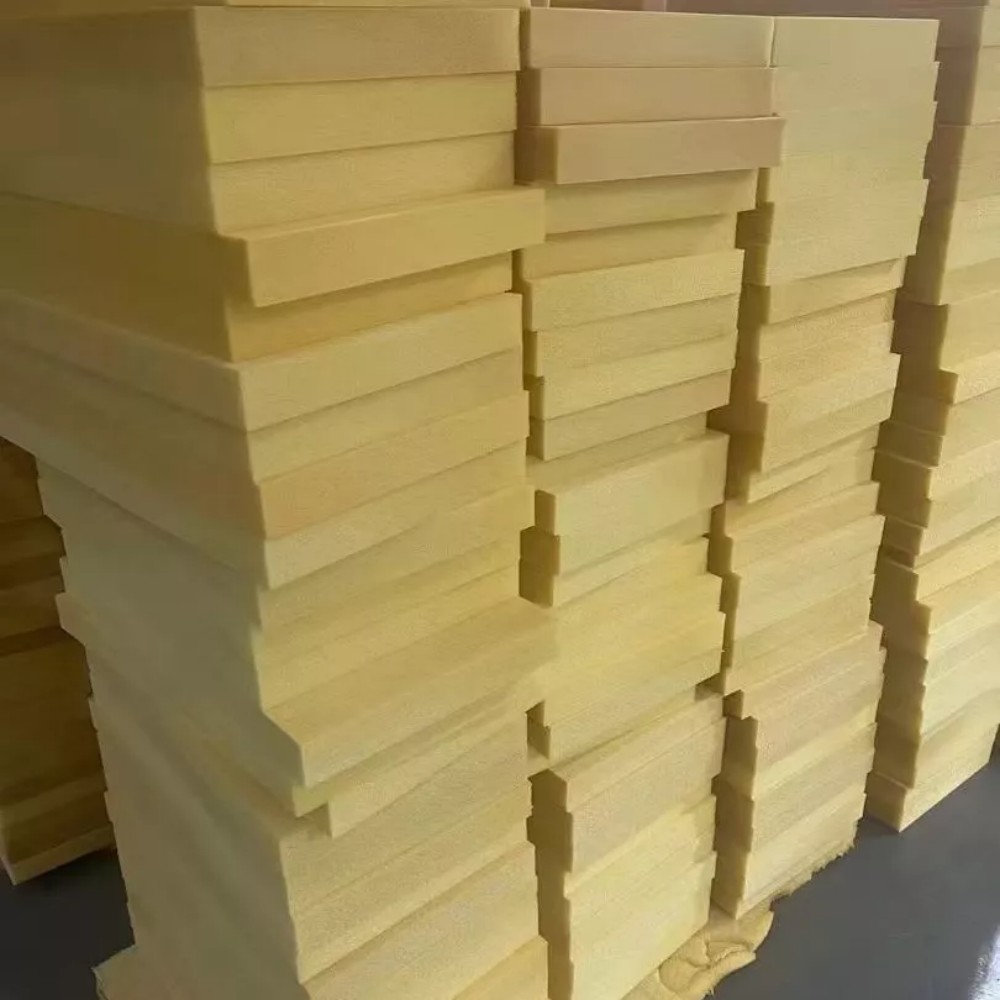
The material can be processed into sheets, strips, customized profiles and insulation components according to specific dimensional requirements.
Flexible insulation is particularly useful around curved surfaces, enclosure corners and components with limited installation space.
Electrical Insulation Properties
Polyimide materials are widely used in electrical insulation applications because of their dielectric properties.
For battery pack applications, the electrical performance of polyimide foam should be evaluated according to the selected grade, material thickness, moisture conditions and required dielectric strength.
Additional electrical insulation layers may be necessary where direct contact with high-voltage components is possible.
Types of Polyimide Foam for Battery Pack Insulation
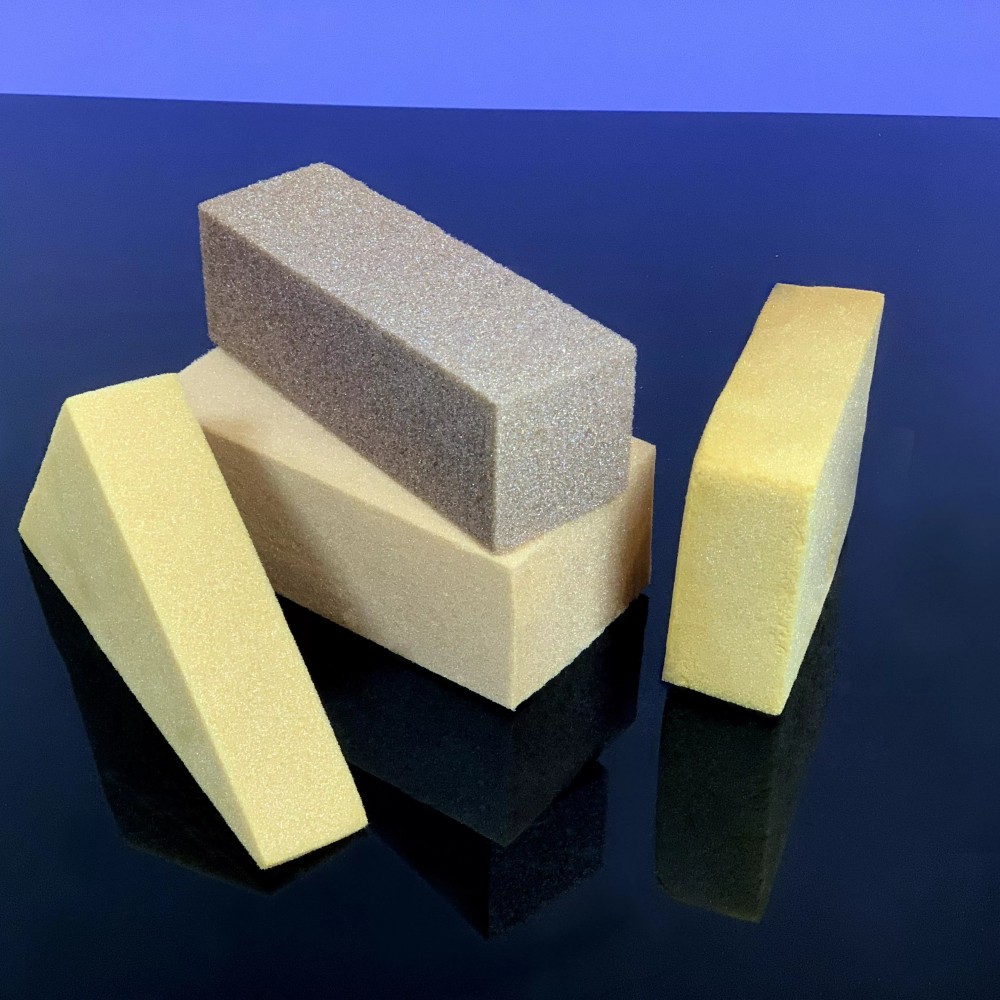
Polyimide foam can be classified into flexible open-cell foam and rigid closed-cell foam. These two product categories have different cellular structures, mechanical properties and processing characteristics.
Selecting the appropriate foam type depends on the intended insulation function and installation environment.
Flexible Open-Cell Polyimide Foam
Flexible polyimide foam features an interconnected cellular structure that provides low density, flexibility and thermal insulation.
JLON flexible polyimide foam has a fully open-cell structure and can be evaluated for applications requiring lightweight insulation and adaptability to complex geometries.
Potential Battery Pack Applications
Flexible polyimide foam can be considered for battery enclosure insulation, irregular gaps, localized thermal insulation around electrical components and other non-load-bearing insulation structures.
Its flexibility allows the material to accommodate installation areas where rigid insulation panels may be difficult to integrate.
Material Selection Considerations
Engineers should evaluate compression behavior, moisture exposure, dimensional recovery and installation methods before selecting flexible open-cell polyimide foam.
Protective films or additional functional layers may be necessary where environmental sealing is required.
Rigid Closed-Cell Polyimide Foam
Rigid polyimide foam features a closed-cell structure and greater dimensional stability than flexible grades.
JLON rigid polyimide foam combines thermal stability, low density and low dielectric constant characteristics, making it a candidate for specialized insulation structures.
Potential Battery Pack Applications
Rigid polyimide foam may be evaluated for flat insulation panels, customized thermal isolation components and insulation structures requiring greater shape retention.
Its rigid structure also allows the production of machined insulation components according to specific engineering drawings.
Material Selection Considerations
Compressive strength, dimensional tolerances, thermal expansion and compatibility with surrounding materials should be evaluated according to the intended application.
Comparison of Flexible and Rigid Polyimide Foam
Property | Flexible Polyimide Foam | Rigid Polyimide Foam |
Cellular Structure | Open-cell | Closed-cell |
Flexibility | High | Low |
Shape Retention | Application-dependent | Higher |
Surface Adaptability | High | Limited |
Processing Options | Sheets, strips and profiles | Panels and machined parts |
Primary Function | Flexible thermal insulation | Shape-retaining insulation |
Installation Geometry | Irregular surfaces | Defined geometries |
Product Customization | Cutting and shaping | Precision machining |
Potential Applications of Polyimide Foam in EV Battery Packs
Polyimide foam can be evaluated for several areas within electric vehicle battery systems. The appropriate material configuration depends on the installation location, temperature exposure and mechanical requirements.
Battery Module Thermal Insulation
Battery modules generate heat during charging and discharging. Insulation materials may be introduced in selected locations to reduce unwanted heat transfer between modules or surrounding components.
Flexible polyimide foam offers a potential solution where lightweight insulation and geometric adaptability are important.
For direct cell-to-cell thermal barriers, additional evaluation of extreme-temperature resistance and thermal propagation performance is essential.
Battery Pack Enclosure Insulation
Battery pack enclosures protect internal components from external environmental and mechanical conditions.
Polyimide foam may be integrated into selected enclosure areas to provide thermal isolation from nearby vehicle structures or external temperature variations.
Its low density can help minimize additional insulation weight while maintaining a practical installation thickness.
Thermal Insulation Around Electrical Components
Battery management systems, busbars, connectors, sensors and power distribution components may require localized thermal insulation.
Customized polyimide foam components can be evaluated for areas where high-temperature resistance and complex geometries create challenges for conventional insulation materials.
Electrical clearance, dielectric performance and compatibility with surrounding components must also be considered during material selection.
Battery Energy Storage Systems
Beyond electric vehicles, polyimide foam may also be considered for battery energy storage systems (BESS), industrial battery cabinets and high-temperature electrical enclosures.
Although stationary energy storage systems have different weight and packaging requirements, thermal stability and material durability remain important considerations.
JLON provides battery thermal insulation materials for engineering evaluation across electric mobility and energy storage applications.
Polyimide Foam vs. Other EV Battery Insulation Materials
Battery manufacturers use different insulation materials depending on thermal exposure, available space, mechanical requirements and system cost.
Polyimide foam should be evaluated alongside established battery insulation materials rather than treated as a universal replacement.
Polyimide Foam vs. Aerogel Blanket
Aerogel blankets generally provide excellent thermal insulation performance at relatively small thicknesses, making them attractive for space-constrained battery systems.
Polyimide foam offers low-density construction, flexible insulation and customized processing capabilities.
The selection depends on thermal conductivity requirements, mechanical handling, available thickness and environmental conditions.
Polyimide Foam vs. Mica Sheet
Mica sheets are widely used in applications requiring electrical insulation and high-temperature barriers.
Compared with relatively rigid mica sheets, flexible polyimide foam provides greater adaptability to irregular surfaces.
Mica and polyimide foam may also be evaluated together in multilayer insulation structures where different materials perform complementary functions.
Polyimide Foam vs. Silicone Foam
Silicone foam is commonly used for cushioning, sealing and compression management in battery assemblies.
Polyimide foam may be considered for selected applications where low density and elevated-temperature insulation are primary requirements.
Silicone foam remains an important option when elastic recovery, sealing or controlled compression is essential.
Polyimide Foam vs. Ceramic Fiber Insulation
Ceramic fiber materials generally offer higher extreme-temperature capabilities than polymeric foams.
Polyimide foam provides an alternative for applications emphasizing lightweight construction, flexibility and customized polymer-based insulation.
For direct exposure to extreme heat or flame, ceramic-based barriers may be more appropriate.
Comparison of EV Battery Thermal Insulation Materials
Insulation Material | Main Advantages | Selection Considerations |
Polyimide Foam | Lightweight, thermal stability, customization | Compression and moisture resistance |
Aerogel Blanket | Low thermal conductivity at limited thickness | Cost, handling and mechanical durability |
Mica Sheet | High-temperature and electrical insulation | Flexibility and installation geometry |
Silicone Foam | Cushioning, sealing and elastic recovery | Temperature capability and density |
Ceramic Fiber | Extreme-temperature insulation | Fiber containment and material integration |
Different insulation materials can be combined to achieve complementary thermal, electrical and mechanical functions within a battery system.
How to Select Polyimide Foam for EV Battery Applications
Selecting a suitable polyimide foam requires an understanding of the complete battery insulation structure rather than focusing exclusively on temperature resistance.
Operating Temperature and Exposure Duration
Engineers should identify normal operating temperatures, maximum continuous temperatures and potential short-term thermal exposure before selecting an insulation material.
Continuous and Short-Term Temperature Requirements
Continuous temperature resistance describes material suitability for sustained thermal exposure, while short-term temperature resistance relates to limited-duration exposure.
Both parameters should be considered alongside the expected operating environment.
Understanding Temperature Ratings
A material rated for continuous operation at 300°C does not necessarily provide sufficient protection against direct flame exposure or battery thermal runaway propagation.
Temperature ratings, flammability performance and thermal barrier effectiveness must be evaluated separately.
Foam Density and Thickness
Density affects insulation weight, mechanical behavior and installation characteristics, while thickness influences thermal resistance and available installation space.
The optimum combination should be determined through thermal calculations and application-specific testing.
A lower-density or thinner foam is not necessarily the most effective solution for every battery pack design.
Compression and Mechanical Requirements
Battery insulation materials may experience assembly pressure, vibration and repeated dimensional changes.
Flexible polyimide foam should be evaluated for compression behavior, dimensional recovery and long-term stability under expected installation conditions.
Rigid polyimide foam should be assessed for compressive strength and resistance to mechanical damage.
Moisture and Environmental Exposure
Battery packs may encounter humidity, condensation, temperature cycling and exposure to automotive fluids.
Open-cell polyimide foam may require protective facings or encapsulation in moisture-sensitive locations.
Adhesives, protective layers and adjacent materials should also be evaluated as part of the complete insulation structure.
Customized Processing and Installation
JLON offers customized polyimide foam processing according to customer drawings, material specifications and application requirements.
Potential configurations include flat insulation sheets, die-cut components, customized profiles and laminated insulation structures.
Design engineers and purchasing teams should consider dimensional tolerances, assembly methods, material compatibility and production requirements during the development stage.

Testing and Validation of Battery Insulation Materials
Material qualification is an essential step before introducing polyimide foam into commercial battery pack designs.
Material-Level Testing
Relevant material evaluations include thermal conductivity, density, compression properties, thermal aging, flammability, dielectric strength and dimensional stability.
Testing conditions should reflect the intended installation environment and operating temperatures.
Battery System-Level Testing
Battery pack manufacturers must evaluate the performance of the complete insulation system under representative operating and abnormal conditions.
Material-level test results cannot replace module-level or battery pack-level safety validation.
Where thermal propagation resistance is required, the insulation structure must be assessed together with protective barriers, cooling systems, enclosure designs and other safety components.
JLON Polyimide Foam Supplier for Battery Thermal Insulation
JLON supplies high-temperature insulation materials for demanding industrial and engineering applications, including flexible polyimide foam, rigid polyimide foam and customized insulation components.
We work with automotive manufacturers, battery system developers, industrial equipment manufacturers and engineering teams to evaluate material options according to specific project requirements.
Customized Polyimide Foam Solutions
JLON supports material selection and customized processing based on foam density, thickness, temperature requirements and component geometry.
Our polyimide foam materials can be evaluated for new product development, prototype manufacturing and industrial production projects.
Technical Information and Sample Requests
Customers developing EV battery thermal insulation systems can contact JLON with their required operating temperature, insulation thickness, component dimensions and technical specifications.
Explore our polyimide foam products for additional material information, technical parameters and available product options.
Frequently Asked Questions
Is Polyimide Foam Suitable for EV Battery Pack Insulation?
Polyimide foam is a candidate material for selected EV battery insulation applications requiring low density, thermal stability and geometric adaptability. Its suitability must be confirmed through application-specific testing.
Can Polyimide Foam Prevent Battery Thermal Runaway?
Polyimide foam can contribute to thermal isolation, but its temperature resistance alone does not demonstrate thermal runaway propagation prevention. Complete battery system validation is necessary.
What Is the Temperature Resistance of JLON Polyimide Foam?
JLON general-purpose flexible polyimide foam offers long-term temperature resistance up to 300°C and short-term temperature resistance up to 350°C. Temperature performance varies according to product grade and exposure conditions.
Is Polyimide Foam Better Than Aerogel for Battery Insulation?
Neither material is universally superior. Aerogel offers excellent thermal insulation at limited thicknesses, while flexible polyimide foam provides low density, geometric adaptability and high-temperature polymeric insulation characteristics.
Can JLON Supply Customized Polyimide Foam Components?
JLON offers customized foam sheets, profiles and insulation components based on customer drawings, dimensions, density requirements and operating conditions, subject to manufacturing feasibility.
Conclusion
Polyimide foam combines lightweight construction, thermal stability and design flexibility, making it a potential material for advanced EV battery thermal insulation systems.
The appropriate insulation solution depends on operating temperature, available installation space, mechanical requirements and battery system safety objectives.
By supplying flexible polyimide foam, rigid polyimide foam and customized insulation components, JLON supports battery manufacturers and engineering teams in evaluating high-performance thermal insulation materials for electric vehicles and energy storage systems.


