



Table of Contents
Semiconductor manufacturing equipment operates under demanding conditions where temperature stability, contamination control, and material reliability are essential. From heated process chambers to gas delivery systems, even minor temperature fluctuations or airborne particles can affect equipment performance, process consistency, and production yield.
Selecting the right thermal insulation material for semiconductor equipment is therefore more complex than choosing a material with low thermal conductivity. Engineers must also consider long-term heat resistance, particle generation, outgassing, dimensional stability, and compatibility with surrounding components.
Polyimide foam (PI foam) is an advanced high-temperature insulation material that can be evaluated for specialized semiconductor equipment applications. Its lightweight cellular structure, thermal resistance, and potential for low-contamination insulation designs make it an attractive option for selected equipment components.
At JLON, we supply high-performance polyimide foam insulation materials and support customers evaluating PI foam for industrial, electronics, and precision equipment applications. This guide explains how polyimide foam works, where it may be used in semiconductor equipment, and which properties engineers should evaluate before selecting a material.
Why Semiconductor Equipment Requires Specialized Thermal Insulation
Semiconductor manufacturing involves precisely controlled thermal, chemical, and mechanical processes. Equipment may contain heated chambers, temperature-controlled gas lines, vacuum-related assemblies, and sensitive electronic components operating close to one another.
Thermal insulation can help maintain stable operating conditions while protecting adjacent structures from unnecessary heat exposure.
Temperature Stability in Semiconductor Processing
Thermal management is important in processes such as chemical vapor deposition (CVD), atomic layer deposition (ALD), diffusion, and selected etching systems.
Although temperatures differ considerably between processes, many equipment assemblies contain heated components requiring carefully designed thermal insulation.
Effective insulation may reduce heat loss from heated equipment surfaces, improve thermal uniformity in selected assemblies, limit heat transfer to nearby electronic components, reduce energy consumption, and support more consistent operation of heated gas lines.
However, the suitability of a particular insulation material depends on the actual surface temperature, exposure duration, installation environment, and equipment design.
Particle Contamination and Manufacturing Yield
Particle contamination is a major concern in semiconductor manufacturing.
Particles released from insulation materials may become problematic when they enter sensitive process environments or reach critical equipment surfaces.
Potential contamination sources include insulation fibers, loose particles, degraded polymers, machining debris, and particles generated through mechanical abrasion.
Why Insulation Material Selection Matters
Traditional fibrous insulation can release loose fibers when cut, handled, vibrated, or mechanically disturbed.
Cellular insulation materials such as polyimide foam offer a different microstructure, potentially reducing certain fiber-related contamination mechanisms.
Nevertheless, polyimide foam is not automatically particle-free.
Its particle generation behavior depends on foam formulation, pore structure, mechanical strength, surface treatment, manufacturing quality, and installation conditions.
For sensitive semiconductor applications, particle release should be evaluated using an agreed testing procedure rather than assumed from the material category.
What Is Polyimide Foam?
Polyimide foam is a cellular polymer material based on polyimide chemistry. Polyimides are recognized for their thermal stability and ability to withstand demanding operating environments.
Unlike conventional insulation foams designed primarily for room-temperature applications, selected PI foam formulations can retain useful insulation properties at substantially higher temperatures.
Key Properties of High-Temperature Polyimide Foam
Polyimide foam combines several characteristics relevant to advanced industrial insulation.
These include high-temperature resistance, low-density cellular construction, thermal insulation performance, potential flexibility, sound absorption in suitable open-cell structures, and the ability to produce custom-shaped insulation components.
Flame-resistant behavior and long-term thermal stability depend on the specific formulation and should be confirmed through appropriate testing.
For semiconductor applications, additional attention must be given to cleanliness, outgassing, chemical compatibility, and material degradation.
Open-Cell Structure and Thermal Performance
Many flexible polyimide insulation foams have an open-cell structure.
Open-cell PI foam contains interconnected pores within the polymer network. The combination of the solid polymer skeleton and gas-filled pores can help reduce heat transfer compared with a solid material of similar composition.
However, thermal conductivity is influenced by more than density alone.
Factors Affecting Thermal Conductivity
Important factors include foam density, pore size, pore connectivity, average operating temperature, gas composition, surrounding pressure, compression during installation, moisture exposure, and protective coverings.
In vacuum or reduced-pressure environments, heat-transfer behavior may differ significantly from measurements performed in ambient air.
Engineers should therefore use thermal conductivity data measured under representative operating conditions.
High-Temperature Polyimide Foam for Semiconductor Equipment
One of the main reasons to consider polyimide foam insulation is its ability to operate in environments where conventional organic foams may be unsuitable.
Long-Term Thermal Resistance Around 250°C
Selected high-temperature PI foam grades are designed for prolonged exposure to elevated temperatures.
For JLON customers evaluating insulation around 250°C, material selection should consider not only initial heat resistance but also changes after extended thermal aging.
Relevant performance indicators include weight loss after thermal exposure, dimensional change, compression recovery, mechanical deterioration, changes in thermal conductivity, and surface cracking or particle release.
A material that survives brief exposure to a high temperature is not necessarily suitable for continuous operation at the same temperature.
Continuous Service Temperature vs Decomposition Temperature
Continuous service temperature and thermal decomposition temperature describe different material behaviors.
Thermogravimetric analysis (TGA) measures mass loss under a defined heating program and atmosphere.
A high decomposition temperature does not mean that a foam can operate continuously at that temperature without changes in physical properties.
For example, a PI foam showing substantial thermal stability during TGA testing still requires long-term aging evaluation before being specified for continuous 250°C operation.
JLON recommends reviewing the technical data sheet and conducting application-specific testing when evaluating high-temperature polyimide foam.
Thermal Cycling and Dimensional Stability
Semiconductor equipment may experience repeated heating and cooling during operation, maintenance, and shutdown cycles.
Thermal cycling can affect insulation through expansion, contraction, compression, and gradual mechanical degradation.
These effects are particularly important when foam insulation is installed around metal components with different thermal expansion characteristics.
Engineers should evaluate dimensional changes, attachment reliability, and potential particle generation after repeated temperature cycles.
Particle Control: A Critical Consideration for PI Foam
For semiconductor equipment manufacturers, cleanliness can be as important as thermal performance.
An insulation material may provide excellent heat resistance but still be unsuitable if it releases unacceptable particles into a sensitive environment.
Understanding Particle Shedding
Particle shedding refers to the release of small solid fragments from a material during handling, vibration, friction, compression, machining, or thermal aging.
In polyimide foam, potential particle sources include damaged cellular walls, loose cutting debris, degraded surface material, abrasion between foam and adjacent components, and mechanical damage during repeated installation.
The actual particle release rate depends on foam construction and service conditions.
How to Evaluate Particle Generation
A practical particle-control assessment should examine the material before and after representative environmental exposure.
Potential evaluation methods include controlled mechanical vibration, repeated compression, surface rubbing, thermal aging, and particle counting.
Recommended Evaluation Procedure
A suitable qualification process can be divided into four stages.
Stage 1 — Initial Inspection: Examine surface quality, pore structure, and loose debris before installation.
Stage 2 — Thermal Conditioning: Expose the material to its expected operating temperature for a specified duration.
Stage 3 — Mechanical Simulation: Apply representative vibration, compression, or handling conditions.
Stage 4 — Particle Measurement: Quantify released particles using a validated collection and counting method.
The test protocol should define particle size thresholds, sample preparation, airflow conditions, and acceptance criteria.
Cleanroom classification under ISO 14644 relates to the controlled environment. It does not, by itself, establish that an individual foam product is suitable for direct use near exposed wafers.
Can Surface Treatment Reduce Particle Release?
Surface treatment or protective coverings may help reduce direct abrasion and particle escape from certain insulation assemblies.
Possible approaches include suitable films, fabrics, or engineered protective layers.
However, every additional material introduces its own considerations, including temperature resistance, adhesive stability, outgassing, and chemical compatibility.
For high-temperature semiconductor applications, surface treatment must be evaluated as part of the complete insulation assembly rather than as an isolated material.
Potential Applications of Polyimide Foam in Semiconductor Equipment
Polyimide foam may be evaluated for several thermal-management applications in semiconductor manufacturing systems.
The following examples represent potential engineering applications and do not imply that every PI foam grade is qualified for semiconductor use.
1. Heated Gas Delivery Lines
Temperature-controlled gas delivery systems may require insulation to maintain stable temperatures and reduce unwanted heat loss.
PI foam thermal insulation can be considered for selected external pipe or line insulation assemblies where operating temperatures and environmental requirements are compatible.
Important selection factors include thermal conductivity, installation flexibility, compression behavior, and surface cleanliness.
2. Heating Jackets and Thermal Covers
Removable heating jackets are used around selected valves, pipes, and equipment components.
A lightweight insulation layer can help limit heat loss while allowing maintenance access.
Polyimide foam may serve as one component within an engineered heating jacket system.
Design Considerations for Heating Jackets
Engineering considerations include maximum heater temperature, insulation thickness and density, covering material compatibility, compression under fastening pressure, repeated removal and installation, and particle or outgassing requirements.
The final insulation assembly must be qualified for its intended equipment environment.
3. Thermal Barriers Around Equipment Housings
Semiconductor equipment contains electronic, mechanical, and thermal subsystems positioned within limited spaces.
A thermal barrier may help reduce unwanted heat transfer between nearby components.
Where lightweight insulation and high-temperature stability are required, PI foam may be evaluated as an alternative to conventional insulation materials.
However, engineers should verify structural support requirements because low-density flexible foam is not designed to replace load-bearing components.
4. Precision-Machined Thermal Insulation Parts
Certain equipment designs require insulation materials to fit complex geometries.
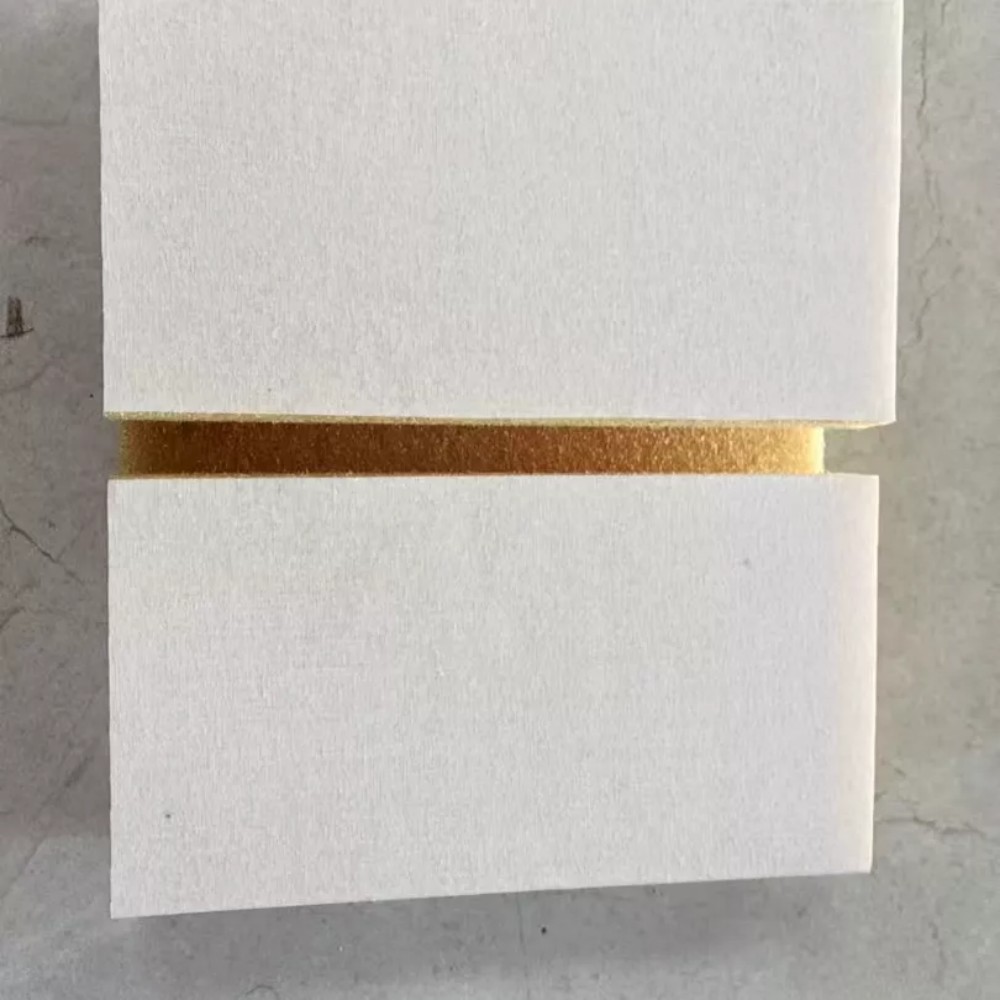
Polyimide foam can potentially be processed into customized shapes, including insulation blocks, rings, sleeves, pipe insulation sections, contoured inserts, and equipment-specific thermal barriers.
Machining methods must account for foam flexibility, density, pore structure, and dimensional requirements.
After cutting or machining, appropriate cleaning and inspection are particularly important for contamination-sensitive applications.
Polyimide Foam vs Traditional Insulation Materials
Different insulation materials offer distinct benefits and limitations.
Polyimide Foam
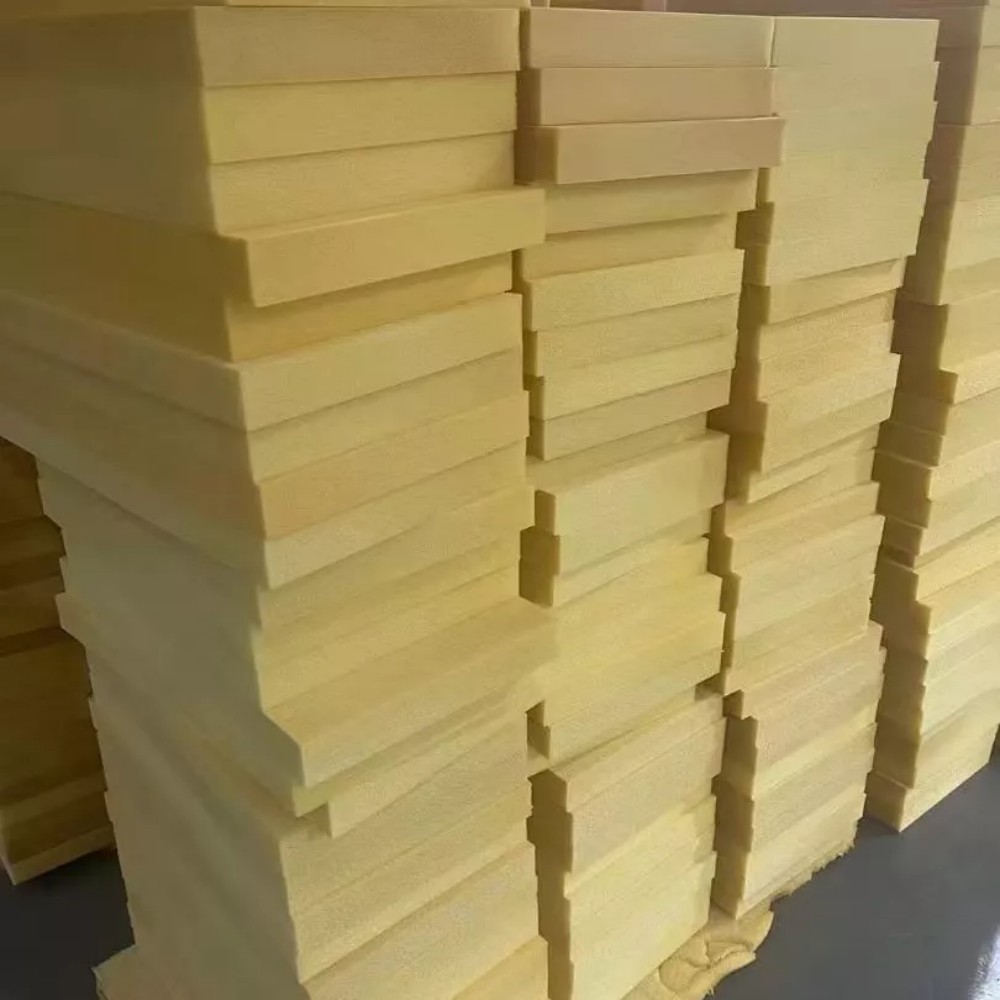
Polyimide foam offers lightweight construction, high-temperature capability, and the availability of flexible grades.
However, particle release, outgassing, and long-term thermal aging behavior require grade-specific evaluation.
Fiberglass Insulation
Fiberglass insulation is an established material with a broad range of temperature capabilities.
Nevertheless, loose fibers and handling-related particles may be concerns in contamination-sensitive environments.
Silicone Foam
Silicone foam provides flexibility and conformability, with certain grades offering useful heat resistance.
Its outgassing and thermal aging characteristics depend on the specific formulation.
Ceramic Fiber Insulation
Ceramic fiber materials can withstand very high temperatures.
However, fiber handling, mechanical durability, and contamination management may complicate their use near sensitive manufacturing processes.
Polyurethane Foam
Polyurethane foam is lightweight, economical, and relatively easy to process.
Many conventional polyurethane grades have limited high-temperature capability compared with specialized polyimide insulation materials.
Which Material Is Best for Semiconductor Equipment?
No single insulation material is ideal for every semiconductor application.
For high-temperature equipment, polyimide foam may be an attractive candidate where its combination of thermal performance, low weight, and available physical configurations addresses a specific engineering requirement.
Comparisons should use actual material grades and validated data, particularly when evaluating contamination-sensitive systems.
How to Choose Polyimide Foam for Semiconductor Applications
Selecting the correct PI foam involves matching material properties with equipment operating conditions.
Density and Mechanical Performance
Foam density affects weight, handling behavior, and mechanical characteristics.
Low-density foam may provide an attractive lightweight insulation solution, but insufficient mechanical strength can cause problems when the material is compressed or repeatedly handled.
Higher-density grades may offer different compression and machining behavior, although density alone does not determine overall performance.
Engineers should select density using actual compression, recovery, thermal conductivity, and durability data.
Pore Size and Porosity
Pore size and porosity are important because they influence mechanical behavior and the movement of gases or liquids through the foam.
For semiconductor-related insulation, pore structure may also affect cleaning effectiveness and the retention of loose particles.
Questions to Ask About Foam Pore Structure
When requesting a material specification, engineers should establish whether the foam is open-cell or closed-cell and whether measured porosity and average pore size are available.
Other relevant questions concern cellular uniformity, compression effects on the pore network, and particle release after thermal aging.
A supplier should distinguish measured values from nominal specifications or research literature.
Outgassing and Chemical Compatibility
Outgassing refers to the release of volatile substances from a material under specified conditions.
For semiconductor environments, even small amounts of unwanted condensable substances may create problems.
Qualification may involve thermal desorption, gas analysis, or other application-specific testing.
ASTM E595 can provide useful outgassing information for certain vacuum applications, but it does not independently demonstrate semiconductor process compatibility.
Polyimide foam should also be evaluated against relevant cleaning agents, process chemicals, humidity, and exposure conditions.
JLON Polyimide Foam Solutions for Industrial Equipment
JLON supplies polyimide foam insulation materials for customers seeking lightweight thermal insulation solutions in demanding industrial applications.
For semiconductor equipment development, we focus on helping engineers identify material specifications suitable for initial technical evaluation.
Product Selection and Technical Support
JLON can assist customers in reviewing the technical requirements of polyimide foam insulation for specialized industrial equipment.
Operating Temperature and Thermal Cycling
We help customers identify the intended continuous operating temperature, maximum short-term exposure temperature, and expected heating and cooling cycles.
These conditions are essential when evaluating material aging, dimensional stability, and long-term performance.
Polyimide Foam Density and Thickness
JLON can discuss available PI foam densities and thickness options based on insulation requirements, component geometry, weight limitations, and mechanical considerations.
The final selection should be supported by the relevant technical data and application requirements.
Thermal Conductivity
Thermal conductivity is an important parameter when designing high-temperature insulation systems.
JLON can review available thermal performance data and help customers determine whether additional testing is necessary under their actual operating conditions.
Open-Cell Structure and Porosity
The cellular structure of polyimide foam influences insulation performance, flexibility, and interaction with the surrounding environment.
Where available, pore structure information can support initial material selection. Applications requiring specific pore size or porosity measurements may need additional characterization.
Mechanical Flexibility and Compression Behavior
Mechanical performance is particularly important for insulation installed around pipes, curved surfaces, and removable equipment components.
Engineers should consider compression resistance, recovery behavior, and the effect of repeated handling on long-term material performance.
Dimensional Requirements
Semiconductor equipment assemblies may require insulation components with controlled dimensions and complex shapes.
JLON can discuss customer drawings, thickness requirements, component dimensions, and achievable tolerances for the selected PI foam grade.
Cutting and Custom-Shaped Components
For applications requiring specialized geometries, JLON can review potential cutting and fabrication methods for polyimide foam insulation.
Processing feasibility depends on material density, flexibility, component geometry, and the required surface finish.
Available Technical Documentation
JLON can provide available technical documentation for the selected polyimide foam products.
Customers requiring specific particle shedding, outgassing, thermal aging, or cleanliness test results should confirm the availability and applicability of those reports before material approval.
Custom Polyimide Foam Components
Equipment manufacturers may require insulation in geometries that are difficult to achieve using standard flat sheets.
JLON can discuss custom dimensions, cutting requirements, and possible fabrication approaches for PI foam insulation components.
Feasibility depends on the selected foam grade, component geometry, tolerances, and processing method.
Information to Provide for a Technical Inquiry
For efficient material evaluation, customers should provide the operating temperature, application environment, required dimensions, insulation thickness, preferred density, and any cleanliness or outgassing specifications.
Drawings or representative component photographs can also help clarify the intended installation.
Frequently Asked Questions
Is Polyimide Foam Suitable for Semiconductor Equipment?
Polyimide foam can be suitable for certain external thermal insulation applications in semiconductor equipment, provided the specific material and assembly meet operating and cleanliness requirements.
Suitability must be verified through application-specific evaluation.
Can Polyimide Foam Operate Continuously at 250°C?
Selected high-temperature polyimide foam grades may be suitable for long-term operation around 250°C.
However, continuous service capability depends on formulation, environmental exposure, mechanical loading, and thermal aging behavior. The applicable JLON product data sheet and qualification testing should be reviewed.
Does Polyimide Foam Release Particles?
Polyimide foam can release particles, particularly after cutting, abrasion, or material deterioration.
Particle generation varies by grade and processing conditions. Low-particle performance should be demonstrated through appropriate testing rather than assumed.
Is Open-Cell Polyimide Foam Better Than Fiberglass Insulation?
Open-cell PI foam may help avoid some loose-fiber issues associated with conventional fibrous insulation.
Nevertheless, fiberglass and polyimide foam differ in thermal performance, mechanical behavior, cost, and cleanliness characteristics.
The preferred option depends on the equipment specification.
Can PI Foam Be Cut into Custom Shapes?
Yes. Certain PI foam grades can be cut or fabricated into application-specific insulation components.
Suitable methods depend on foam density, flexibility, required tolerances, and surface cleanliness requirements.
Conclusion: Selecting High-Temperature PI Foam for Advanced Equipment
Polyimide foam offers an interesting combination of thermal resistance, lightweight construction, and flexible insulation possibilities for advanced industrial equipment.
In semiconductor manufacturing, its potential value extends beyond heat insulation to include equipment integration, thermal cycling performance, and opportunities for engineered particle-control solutions.
However, high-temperature resistance does not automatically mean cleanroom compatibility. Particle shedding, outgassing, chemical resistance, and long-term degradation must be evaluated using the actual material grade and final installation design.
For equipment manufacturers considering polyimide foam for semiconductor thermal insulation, early technical evaluation is essential.
Contact JLON to discuss your PI foam requirements, operating conditions, density, dimensions, and available technical data for material selection and sample evaluation.


