



Table of Contents
High-density PVC foam is widely used in composite boat construction where standard low-density core material cannot provide sufficient resistance to concentrated loads. Typical applications include structural inserts, through-bolted fasteners, deck hardware, engine-room equipment and selected engine-foundation areas.
Unlike the PVC foam used across large hull, deck or bulkhead surfaces, high-density PVC foam is normally installed only in localized reinforcement zones. This allows boat builders to improve compression resistance and load distribution without unnecessarily increasing the weight of the entire structure.
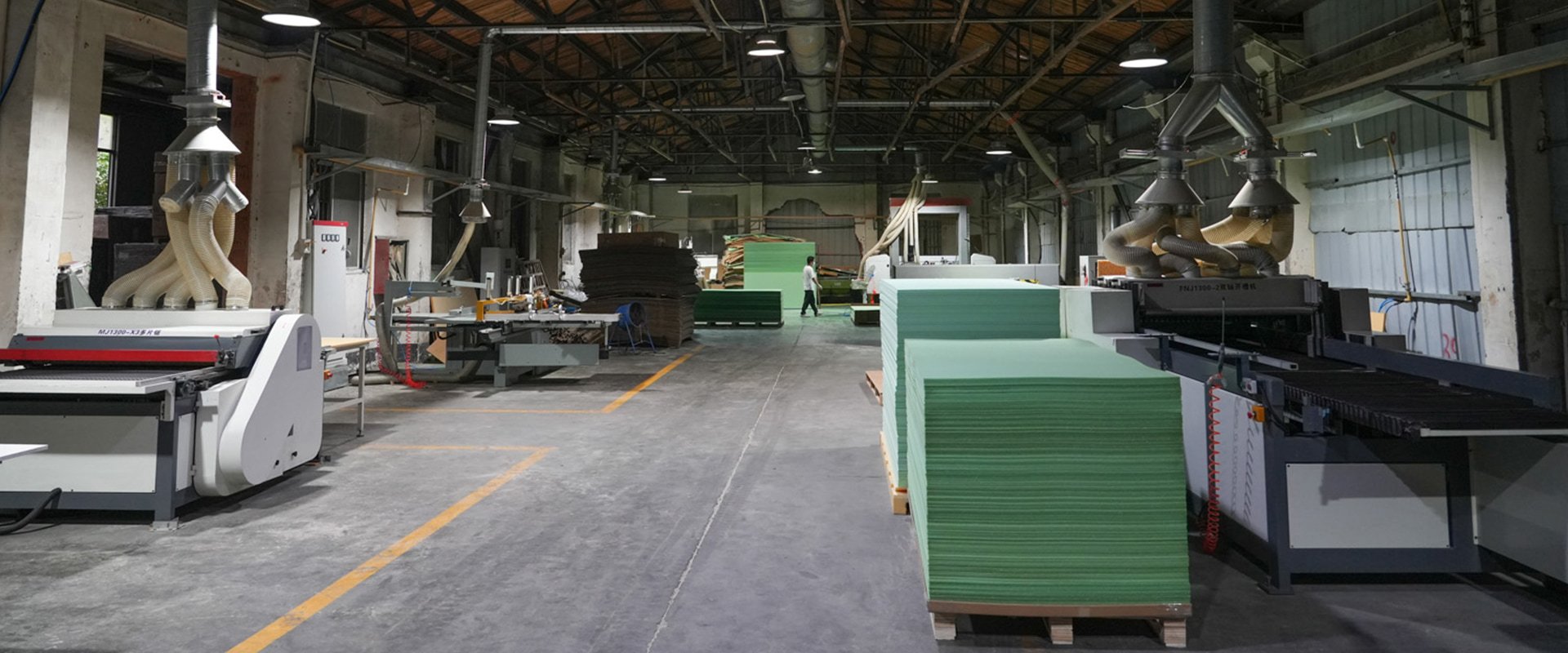
JLON supplies cross-linked PVC foam core in different densities, thicknesses and processed formats for marine composite applications. Material can be supplied as standard sheets, cut-to-size blocks or CNC-machined inserts according to customer drawings.
However, selecting a higher-density foam does not automatically make an attachment structurally safe. The correct solution must consider the applied load, fastener type, laminate construction, insert dimensions, manufacturing process, bonding method and certification requirements.
What Is High-Density PVC Foam?
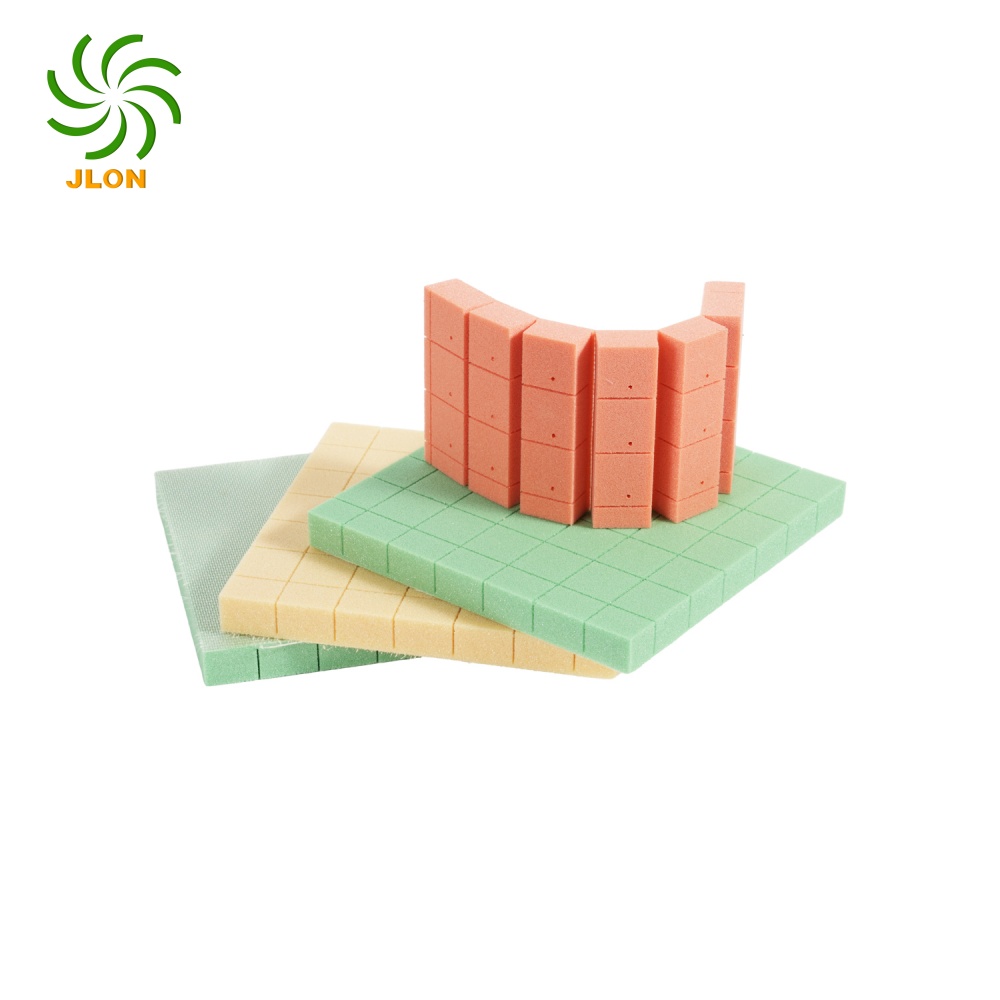
High-density PVC foam is a rigid, closed-cell structural core material with greater compressive strength, shear strength and local load resistance than standard low-density PVC foam core.
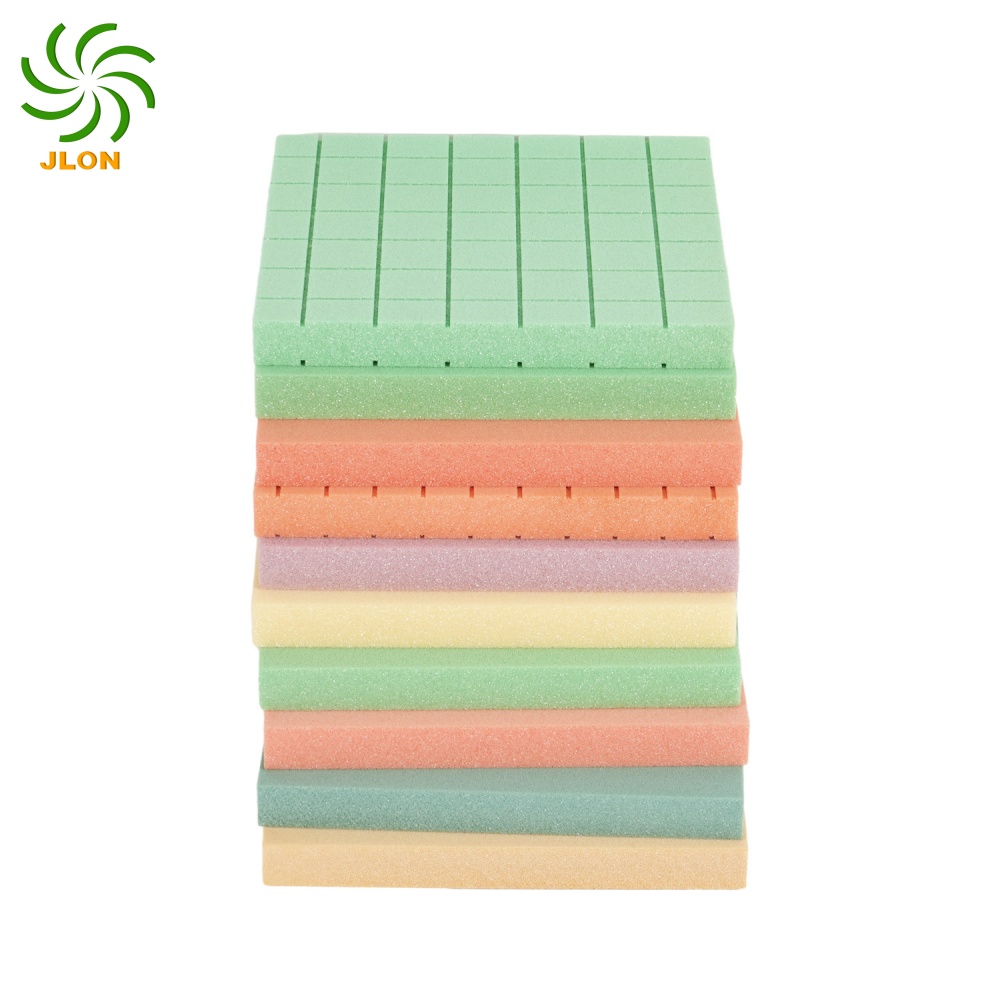
PVC foam used across large marine sandwich panels commonly has a density between approximately 60 and 130 kg/m³. High-density PVC foam used for local reinforcement generally falls between 130 and 250 kg/m³. Specialized grades may reach approximately 300 kg/m³.
As density increases, mechanical performance normally improves, but material weight and price also increase. High-density foam should therefore be placed only where additional structural performance is required.
Key Properties of High-Density PVC Foam
The main purpose of high-density PVC foam is to resist local loads and transfer them into the surrounding sandwich structure.
Higher Compressive Strength
Fasteners, mounting plates and equipment feet apply pressure perpendicular to the sandwich panel. If the core has insufficient compressive strength, it can be crushed when a bolt is tightened or when the mounted component is loaded.
High-density PVC foam provides greater resistance to local compression. This helps maintain panel thickness, reduce surface indentation and preserve bolt preload.
Compressive strength remains only one part of the design. The laminate, washers, backing plates and insert geometry must also be suitable for the expected load.
Improved Shear Performance
Marine attachments rarely experience pure compression. Cleats, hinges, machinery mounts and engine-related structures can also introduce in-plane shear forces.
High-density PVC foam normally provides higher shear strength and shear modulus than lower-density grades. This allows the insert to transfer load more effectively into the adjacent laminate and surrounding core.
The bond between the insert and the surrounding structure must be continuous. Even a strong insert can fail if the bond line contains voids, contamination or insufficient adhesive.
Better Resistance to Local Crushing
A standard foam core may perform well under distributed pressure but fail beneath a small washer or narrow equipment foot. The smaller the contact area, the higher the local stress.
A properly sized high-density PVC foam insert increases the effective load-bearing area and reduces the risk of localized core crushing. In heavily loaded structures, larger backing plates or additional laminate may still be necessary.
Closed-Cell Structure
Cross-linked PVC foam has a closed-cell structure that provides low water absorption and good resistance to the marine environment.
This property makes PVC foam preferable to materials that may rot or absorb significant moisture. Nevertheless, all drilled holes, exposed edges and fastener penetrations must still be sealed correctly.
Why Standard-Density Foam May Fail Around Fasteners
A sandwich panel achieves high bending stiffness by separating two strong outer skins with a lightweight core. The skins carry most of the tensile and compressive loads, while the core transfers shear and maintains the distance between the skins.
A fastener interrupts this efficient load distribution. When a bolt is tightened, the force becomes concentrated within a small area. During service, the attachment may also experience pull-out, shear, bending, impact and vibration.
Common Failure Mechanisms
Several failure modes can develop when the local reinforcement is insufficient.
Core Crushing Beneath the Hardware
Excessive bolt torque or a small mounting plate can crush low-density foam beneath the laminate. Once the core is compressed, the hardware may loosen and the panel can lose its original stiffness.
A high-density insert can reduce this risk by supporting the laminate and distributing pressure over a larger area.
Skin Indentation and Local Delamination
When the core cannot support the outer skin, the laminate may bend or become indented around the fastener. Repeated loading can then cause separation between the laminate and the foam core.
Additional skin thickness, a larger backing plate or a wider high-density insert may be required to control this failure mode.
Fastener Pull-Out
A screw installed directly into foam has limited pull-out resistance. Increasing foam density may improve local support, but high-density PVC foam should not automatically be treated as a threaded structural material.
Critical attachments generally require through-bolts, bonded threaded inserts, structural potting compounds or suitable backing plates.
Water Ingress Around Penetrations
Movement around a loose fastener can damage sealant and allow water to enter the laminate or bond line. Even though PVC foam has low water absorption, water may still travel through cracks, gaps and poorly sealed interfaces.
Correct hole preparation and sealing remain essential.
High-Density PVC Foam for Marine Inserts
A marine insert is a localized reinforcement incorporated into a sandwich panel. It may replace a section of lower-density core or be bonded into a prepared cavity.
The insert receives concentrated loads and spreads them into the surrounding laminate and core.
Through-Bolted Hardware Inserts
Through-bolted fittings are commonly used for cleats, bollards, winches, windlasses, handrails, stanchions and other heavily loaded deck hardware.
Cleats and Bollards
Cleats and bollards can experience large tensile and shock loads during mooring. The actual load may be much greater than the steady force because vessel movement can suddenly tighten the mooring line.
A high-density PVC foam insert may be incorporated beneath the fitting, but critical mooring hardware frequently also requires additional laminate, through-bolts and a metal or composite backing plate.
The insert should normally extend beyond the hardware footprint. This creates a larger load-transfer area and reduces stress at the edges of the fitting.
Winches and Windlasses
Winches and windlasses introduce vertical loads, horizontal loads and torque. Their mounting bolts can also experience repeated cyclic loading.
The insert design must consider the equipment base dimensions, maximum working load, bolt pattern, laminate thickness and direction of loading. A small high-density block may not provide sufficient load distribution if it closely matches only the bolt pattern.
Handrails and Stanchions
Handrails and stanchions produce bending moments because the load is applied above the surface of the deck. This leverage can create high stresses around a relatively small mounting base.
A high-density PVC foam insert can support the base, but the surrounding laminate and fastener arrangement must also be designed for repeated passenger loads and safety requirements.
Edge Inserts for Doors and Hatches
Composite doors, hatches and access panels require durable edges for hinges, latches, locks, handles and gas-strut brackets.
Hinge Reinforcement
Hinges produce repeated localized loading each time a door or hatch is opened. Screws installed into low-density core may gradually loosen.
High-density PVC foam can be installed along the panel edge to create a more stable hardware zone. Depending on the load, bonded inserts or through-fastening may still be required.
Latches and Gas-Strut Brackets
Latches and gas struts can generate concentrated forces that change direction during operation. The reinforcement should extend beyond the immediate screw locations and transfer the load into the panel skins.
The design should also account for repeated use, accidental impact and vibration during vessel operation.
Inserts Around Windows and Structural Openings
Windows, doors and hatches interrupt the continuity of a sandwich panel. Loads may concentrate around corners, frames and fastening points.
Perimeter Reinforcement
High-density PVC foam can be installed around the perimeter of an opening to provide a stable fastening zone and support the pressure applied by the frame.
It can also improve edge finishing and help create a durable sealed boundary around the opening.
Reducing Stress Concentrations
Sharp corners and abrupt changes in stiffness may create stress concentrations. Rounded insert corners, tapered edges and additional laminate overlaps can provide a smoother load transition.
The exact geometry should be selected according to the panel structure and expected load.
High-Density PVC Foam for Fasteners
Different fasteners create different loading conditions. The insert and installation method must therefore be matched to the fastener type.
Screws Installed into Composite Panels
Screws are convenient for lightly loaded components, removable covers and interior fittings.
Limits of Direct Screw Installation
High-density PVC foam can provide better screw support than low-density foam, but direct screw retention depends on the foam grade, screw diameter, thread design, embedment depth and applied load.
Direct screws should not be used for safety-critical or heavily loaded marine fittings unless the complete assembly has been tested and approved.
Suitable Applications
Direct fastening may be considered for light interior trim, access covers or other non-critical components. Even in these applications, repeated removal and reinstallation can damage the hole and reduce holding strength.
A bonded threaded insert may be more durable where regular maintenance is expected.
Through-Bolted Connections
Through-bolts transfer load through the full thickness of the sandwich panel.
Controlling Bolt Compression
Tightening a through-bolt creates compression across the panel thickness. If the core is too soft, the panel can be crushed before the correct bolt preload is achieved.
A high-density PVC foam insert or potted compression sleeve can help resist this force. Washers or backing plates should be sized to distribute the load appropriately.
Preventing Long-Term Loosening
Core creep or local crushing may reduce bolt preload over time. This can lead to movement, sealant failure and fatigue damage.
Material selection should consider long-term compressive behavior, especially in warm engine rooms or other elevated-temperature environments.
Bonded and Potted Inserts
Bonded metallic or composite inserts can provide a durable threaded connection without passing a bolt through the entire panel.
Potting Compound Around the Insert
A structural potting compound can transfer loads from the insert into the surrounding foam and laminate. The potting area must be large enough to resist pull-out and shear loads.
Adhesive compatibility, surface preparation and cure conditions are critical to reliable performance.
Combining Potting with High-Density Foam
High-density PVC foam and structural potting compounds can be used together. The foam provides a stable local core, while the potting compound creates a strong interface around the fastener.
This hybrid method may provide more reliable performance than relying on the foam alone.
High-Density PVC Foam for Engine Foundations
The term “engine foundation” can describe very different structures. It may refer to an auxiliary equipment pad, an engine-room panel or a primary engine bed carrying propulsion loads.
These applications require different levels of reinforcement.
Auxiliary Equipment Foundations
High-density PVC foam can be suitable for mounting pumps, compressors, batteries, electrical cabinets, small generators and other auxiliary equipment.
Static Equipment Loads
The structure must support the equipment weight and any additional loads caused by vessel acceleration. The mounting-foot area, bolt preload and panel span should be evaluated.
High-density PVC foam may be installed beneath the equipment as a local reinforcement zone.
Vibration and Service Environment
Pumps, compressors and generators can introduce continuous vibration. The foam grade, adhesive system and laminate must be able to withstand repeated loading.
The designer should also consider temperature and possible contact with fuel, oil, water or cleaning chemicals.
Primary Engine Beds
A main engine foundation is a critical structural component and should not be designed based on foam density alone.
Loads Acting on a Primary Engine Foundation
The foundation may carry engine weight, torque, propeller thrust, shaft loads, vibration, dynamic acceleration and impact caused by vessel motion. It may also need to maintain precise engine and shaft alignment throughout the vessel’s service life.
These requirements are much more demanding than those of a normal equipment mounting pad.
Role of High-Density PVC Foam
High-density PVC foam may be used in selected areas of an engine foundation to support laminates, create local reinforcement or reduce weight.
However, it should not automatically replace solid fiberglass laminate, steel, aluminum, engineered composite profiles or other primary load-bearing materials.
Hybrid Engine-Foundation Structures
A hybrid structure may combine high-density PVC foam with additional fiberglass laminate, metal plates, composite profiles and potted fasteners.
This design allows each material to perform a specific function. The foam maintains panel geometry and supports local compression, while the laminate and structural reinforcement transfer the primary loads.
Classification and Engineering Approval
Where a vessel is subject to classification requirements, the engine-foundation design may require approval from DNV, ABS, Lloyd’s Register, Bureau Veritas or another classification society.
The final structure should be supported by engineering calculations, material data, representative testing and approval where required.
How to Choose the Correct PVC Foam Density
There is no universal high-density PVC foam grade suitable for every insert, fastener or engine foundation.
The correct material must be selected according to the complete load case.
General Density Ranges
Density ranges provide useful preliminary guidance but should not replace engineering calculations.
PVC Foam from 60 to 130 kg/m³
PVC foam between approximately 60 and 80 kg/m³ is commonly used for lightweight panels and moderately loaded marine structures.
Grades between approximately 80 and 130 kg/m³ are widely used in boat hulls, decks, bulkheads, superstructures and other general structural sandwich panels.
These grades are normally not the first choice for highly concentrated attachment loads unless the loads are relatively low and the reinforcement area is sufficiently large.
PVC Foam from 130 to 200 kg/m³
Grades between approximately 130 and 200 kg/m³ may be considered for local reinforcement, frames, windows, door edges, hardware locations and moderately loaded inserts.
The actual suitability depends on the compressive strength, shear properties, insert dimensions and surrounding laminate.
PVC Foam from 200 to 250 kg/m³
PVC foam between approximately 200 and 250 kg/m³ is often considered for high-load inserts, through-bolted fittings, machinery mounts and other areas requiring strong resistance to local crushing.
These grades add more weight than standard structural foam, so they should normally be limited to selected reinforcement zones.
Specialized Grades Up to 300 kg/m³
Specialized high-density PVC foam may be available up to approximately 300 kg/m³ for demanding insert and reinforcement applications.
A very high nominal density does not automatically guarantee the best result. The complete attachment design and material properties must still be evaluated.
Properties Beyond Density
Two PVC foam products with the same nominal density may provide different performance.
Compressive and Shear Properties
Compressive strength and modulus help determine whether the insert can resist bolt pressure and equipment loads.
Shear strength and modulus affect how effectively the insert transfers load into the surrounding sandwich panel.
Fatigue Resistance
Marine structures are exposed to repeated wave, vibration and operating loads. Fatigue performance is particularly important for deck hardware, seating, machinery and engine-room applications.
A material that survives a short static test may still fail after repeated service cycles.
Temperature Resistance
Engine rooms and machinery spaces may expose the foam to elevated temperatures. The selected PVC foam grade must remain dimensionally stable under the expected service and processing temperatures.
Temperature limits should be confirmed using the technical data sheet for the exact material grade.
Bonding Performance
The insert must bond reliably to the outer skins and surrounding core. Surface condition, adhesive type, resin compatibility and processing conditions all affect bond quality.
Testing the complete insert assembly is more reliable than evaluating foam properties alone.
Designing and Installing High-Density PVC Foam Inserts
Correct material selection can still result in failure if the insert is too small, poorly bonded or incorrectly installed.
Determining Insert Size
The high-density insert should normally extend beyond the mounting plate, washer or equipment foot.
Load-Transfer Area
A larger insert provides more area for transferring concentrated loads into the surrounding laminate. The required size depends on the applied load, panel thickness, skin stiffness, bond strength and fastener arrangement.
The insert should not be sized only according to the dimensions of the bolt or washer.
Insert Thickness
In many applications, the insert replaces the full thickness of the standard foam core. This allows it to connect both skins and resist through-thickness compression.
Partial-depth inserts may be possible in specific designs, but their load-transfer behavior must be evaluated carefully.
Managing Stiffness Transitions
An abrupt transition from very high-density foam to low-density foam can create stress concentrations.
Tapered Insert Edges
Tapered or chamfered insert edges can provide a more gradual change in stiffness. Additional laminate may also be applied across the transition zone.
Stepped-Density Construction
A highly loaded attachment area may use a central high-density insert surrounded by a medium-density transition zone and then the standard foam core.
This arrangement can distribute load more gradually than placing a small rigid block directly into low-density foam.
Controlling the Bond Line
A continuous bond between the insert, skins and surrounding foam is essential.
Surface Preparation
The foam and laminate surfaces should be clean, dry and free from dust, oil and release agents. Surface preparation should follow the adhesive or resin supplier’s instructions.
Adhesive Coverage
Insufficient adhesive can create voids, while excessive adhesive can add unnecessary weight and produce uneven bond-line thickness.
The adhesive should provide complete coverage without leaving gaps around the insert.
Vacuum Infusion Considerations
During vacuum infusion, the insert can change resin-flow paths. Gaps, grooves or poorly sealed edges may cause dry areas or excessive resin accumulation.
Representative production trials should be conducted before large-scale manufacturing.
Sealing Fastener Penetrations
Closed-cell PVC foam has low water absorption, but all penetrations must still be sealed.
Oversized Hole and Potting Method
A common method is to drill an oversized hole, remove a controlled amount of core around the penetration and fill the cavity with a structural potting compound.
After the compound has cured, the final fastener hole is drilled through the potted material. This creates a sealed and compression-resistant zone around the bolt.
Final Hardware Installation
The fastener should be installed with the correct torque, washer or backing plate and marine sealant.
Excessive torque can damage the laminate or insert, while insufficient torque may allow movement and water ingress.
Common Mistakes to Avoid
Using the Same Foam Density Throughout the Boat
Using one density may simplify purchasing, but it can produce either an overweight structure or inadequate local reinforcement. Local density zoning normally provides a better balance between weight, performance and cost.
Selecting Foam Based Only on Compressive Strength
An attachment can experience compression, shear, pull-out, bending, impact and fatigue at the same time. Compressive strength alone does not describe the complete performance of the insert.
Installing Critical Screws Directly into Foam
High-density PVC foam can improve screw support, but critical hardware should not rely exclusively on direct screw retention without testing.
Through-bolts, potted inserts and backing plates are generally more appropriate for demanding marine attachments.
Ignoring Vibration and Fatigue
Engines, generators, pumps, seating and deck hardware experience repeated loading. Long-term fatigue and vibration should be considered during design and material selection.
Failing to Seal Fastener Holes
Low water absorption does not eliminate the need for sealing. Water can still travel through cracks, gaps, laminate damage and poorly bonded interfaces.
Why Choose JLON High-Density PVC Foam?
JLON supplies high-density cross-linked PVC foam for boat builders, composite manufacturers, distributors and industrial panel producers.
Available JLON Supply Formats
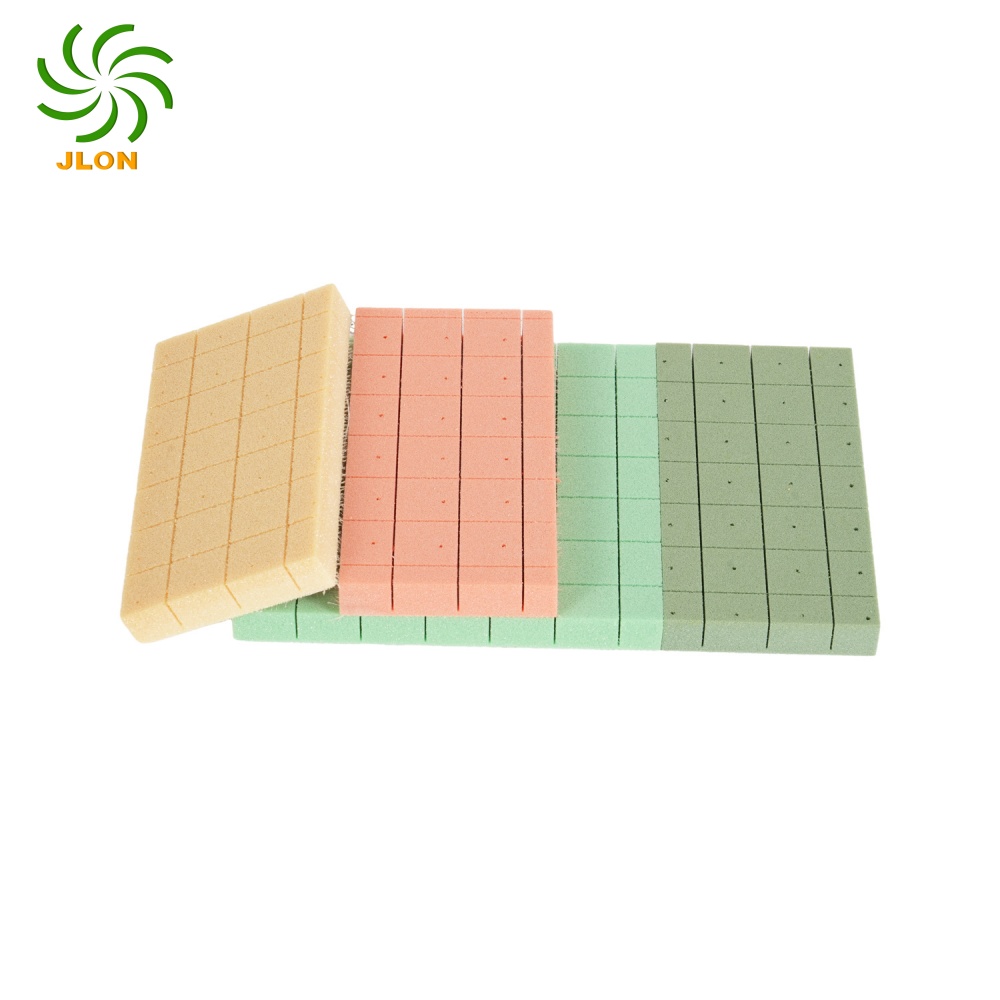
JLON can supply standard high-density PVC foam sheets, cut-to-size blocks, CNC-machined inserts, grooved foam, perforated foam and contour-cut panels.
Customized processing can reduce manual cutting, improve dimensional consistency and simplify installation during composite manufacturing.
Material Selection Support
Customers can provide their application, target density, thickness, dimensions, manufacturing process and certification requirements.
JLON can propose candidate materials and processed formats for customer evaluation and testing. Final structural approval remains the responsibility of the vessel designer, manufacturer or classification authority.
Marine Documentation and Certification
JLON can provide technical data, material samples and relevant marine certification documents for suitable PVC foam grades.
Where DNV or another marine approval is required, the exact certificate scope should be checked against the ordered grade, density, manufacturing location and intended application.
Combined Supply for Marine Composite Production
In addition to PVC foam core, JLON can support marine customers with PET foam, fiberglass reinforcements and vacuum-infusion materials.
This combined supply capability can simplify purchasing and help customers consolidate different composite materials in one shipment.
Information Required for a Quotation
To obtain an accurate quotation, customers should provide the vessel type, application, insert location, required density, thickness, dimensions and annual quantity.
The inquiry should also include the fastener type, bolt diameter, equipment weight, expected loads, resin system, production process, curing temperature and service temperature.
For customized inserts, a dimensional drawing should be provided. The drawing should identify tolerances, holes, grooves, tapers and other machining requirements.
Any DNV, ABS, Lloyd’s Register, Bureau Veritas or other classification requirement should be stated at the beginning of the inquiry.
Frequently Asked Questions
Can High-Density PVC Foam Hold Screws Directly?
High-density PVC foam provides better local support than low-density foam, but direct screw retention depends on the foam grade, screw design, embedment depth and applied load.
Critical marine attachments should normally use through-bolts, bonded inserts, potting compounds or backing plates.
What Density Is Used for Marine Inserts?
Densities between approximately 130 and 250 kg/m³ are commonly considered for local reinforcement. However, no single density is suitable for every insert.
The final selection should consider compression, shear, pull-out, fatigue, temperature and environmental requirements.
Can High-Density PVC Foam Be Used Under an Engine?
High-density PVC foam may be used as part of a reinforced equipment pad or engine-foundation structure.
A primary engine bed must transfer weight, torque, thrust, vibration and fatigue loads. It normally requires a complete engineered structure that may also include solid laminate, composite profiles or metal reinforcement.
Is High-Density PVC Foam Waterproof?
Its closed-cell structure provides low water absorption and good marine durability. Nevertheless, drilled holes, exposed edges and fastener penetrations must still be sealed correctly.
Can JLON Supply CNC-Machined PVC Foam Inserts?
JLON can supply cut-to-size and CNC-machined high-density PVC foam components according to customer drawings, density requirements and dimensional tolerances.
Conclusion
High-density PVC foam is an effective solution for reinforcing inserts, fasteners, deck hardware and selected machinery-foundation areas in composite boats.
It provides greater local compression and shear performance than standard-density foam while preserving the lightweight advantages of sandwich construction.
Successful application depends on more than selecting a high nominal density. Insert dimensions, laminate design, bonding quality, load transfer, fatigue, vibration, temperature and moisture sealing must all be considered.
For primary engine foundations and heavily loaded deck hardware, high-density PVC foam should be treated as one part of a complete engineered attachment system rather than a universal replacement for solid laminate or metal reinforcement.
JLON supplies high-density PVC foam sheets and customized inserts for marine composite structures. Customers can contact JLON with their application, dimensions, density, manufacturing process and certification requirements to identify a suitable material for testing and final design approval.