



Table of Contents
Aramid honeycomb core is a lightweight, high-performance structural material widely used in aerospace, UAVs, automotive racing, marine equipment, and advanced composite sandwich panels. Its combination of low weight, high specific strength, and structural efficiency makes it an important core material for lightweight composite construction.
However, selecting the right aramid honeycomb cell size and density is essential for achieving the required mechanical performance, weight efficiency, and manufacturing compatibility.
Two of the most important specifications are cell size, which influences local face sheet support, surface quality, and processing behavior, and density, which affects compressive strength, shear properties, and overall panel weight.
At JLON, we supply aramid honeycomb core materials for composite applications, with specifications selected according to structural requirements, processing methods, and customer drawings.
This guide explains how to select aramid honeycomb cell size, density, thickness, and other important specifications for composite sandwich construction.
What Is Aramid Honeycomb Core?
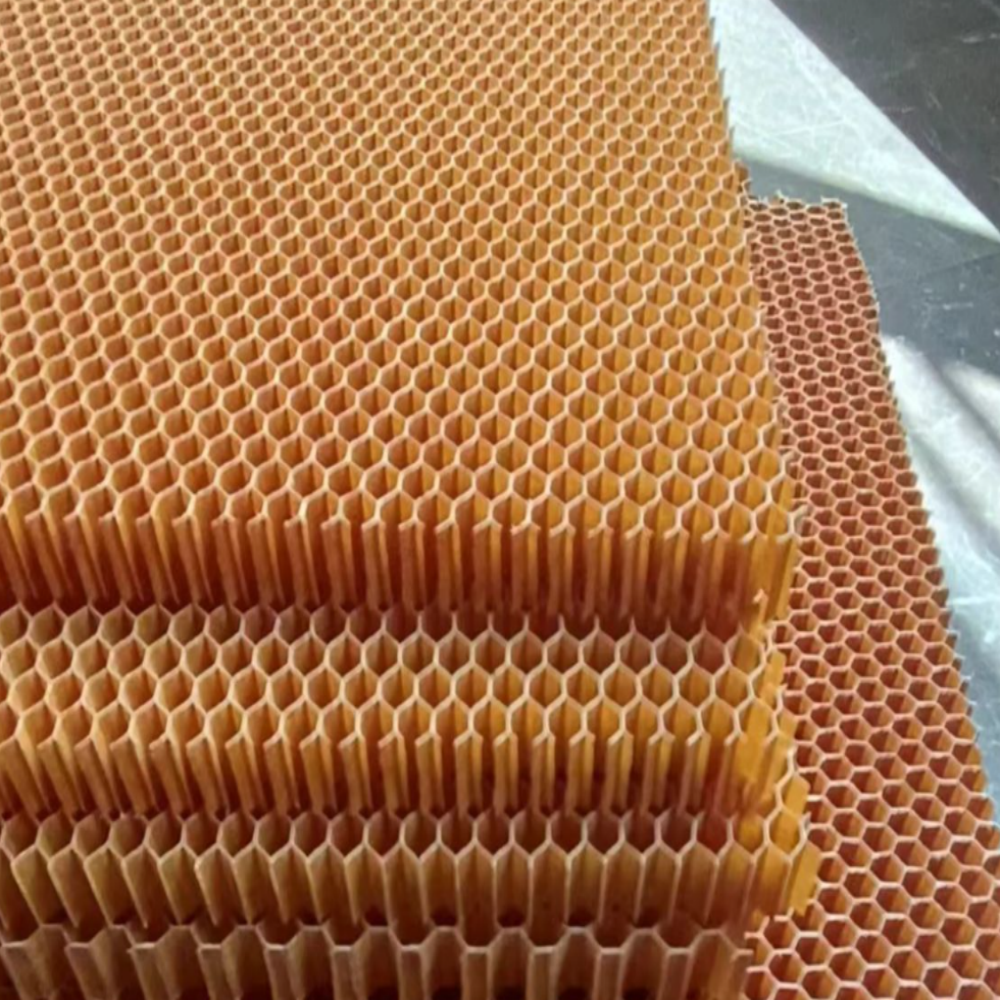
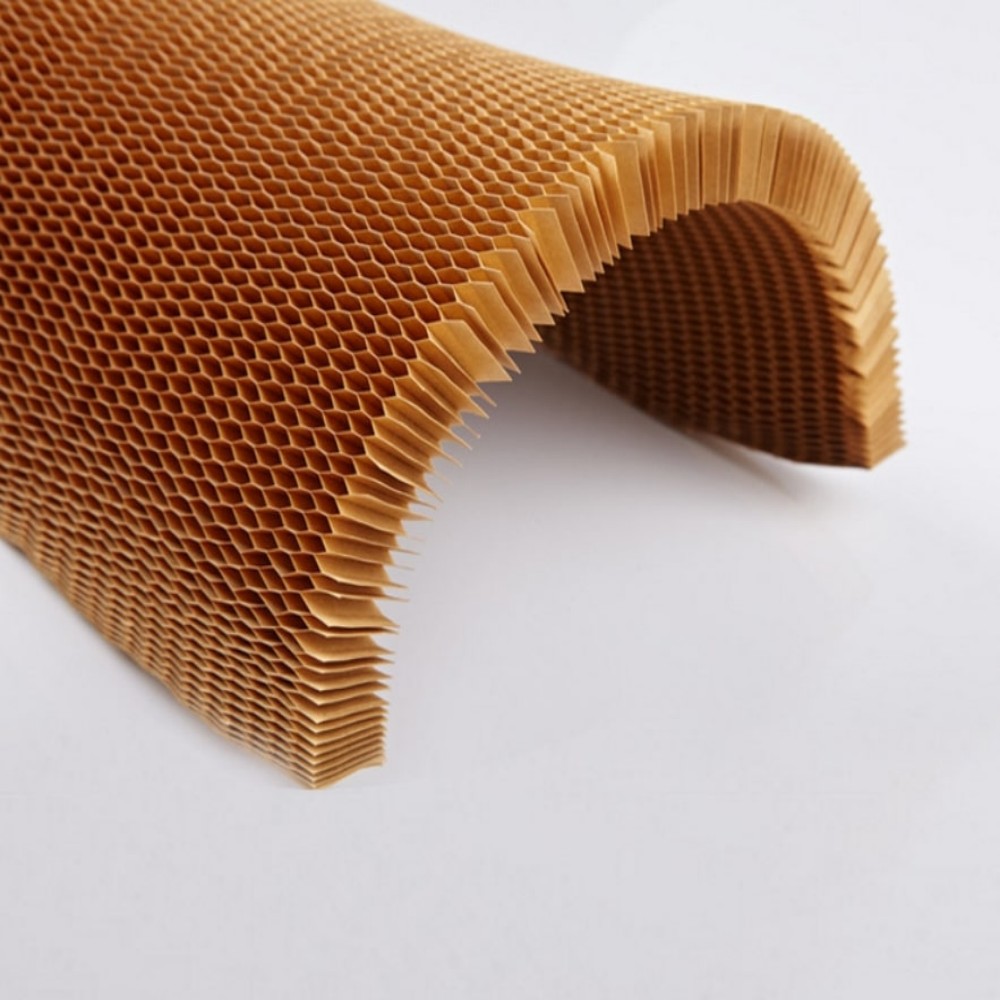
Aramid honeycomb is a non-metallic cellular core material manufactured from aramid fiber paper formed into a hexagonal honeycomb structure and impregnated with resin.
It is commonly used between two composite face sheets to create lightweight sandwich panels with high bending stiffness and structural efficiency.
Typical face sheet materials include carbon fiber reinforced polymer (CFRP), glass fiber reinforced polymer (GFRP), prepreg composite laminates, and other compatible structural composite skins.
The honeycomb core separates the face sheets and helps transfer shear loads, while the skins carry much of the bending tension and compression.
Key Advantages of Aramid Honeycomb
Compared with many conventional structural materials, aramid honeycomb offers several advantages.
Lightweight Construction: Low-density cellular structures help reduce overall component weight.
High Specific Mechanical Performance: Suitable grades provide useful compressive and shear properties relative to their weight.
Sandwich Panel Efficiency: The core increases the separation between face sheets, improving bending stiffness without requiring a solid laminate.
Non-Metallic Construction: Useful where metallic cores are undesirable.
Flexible Specifications: Different cell sizes, densities, thicknesses, and resin systems can be selected for specific applications.
Performance depends on the honeycomb grade, resin system, cell geometry, manufacturing quality, and loading direction.
Aramid Honeycomb vs Nomex Honeycomb
The terms aramid honeycomb and Nomex honeycomb are often used interchangeably in composite material purchasing.
However, Nomex is a trademark associated with a particular aramid fiber material, while aramid honeycomb is a broader product category.
Aramid honeycomb products from different manufacturers may vary in paper composition, resin impregnation, mechanical properties, and qualification status.
When evaluating an alternative to a specified Nomex honeycomb grade, buyers should compare the complete technical specification rather than relying only on nominal density and cell size.
Understanding Aramid Honeycomb Cell Size
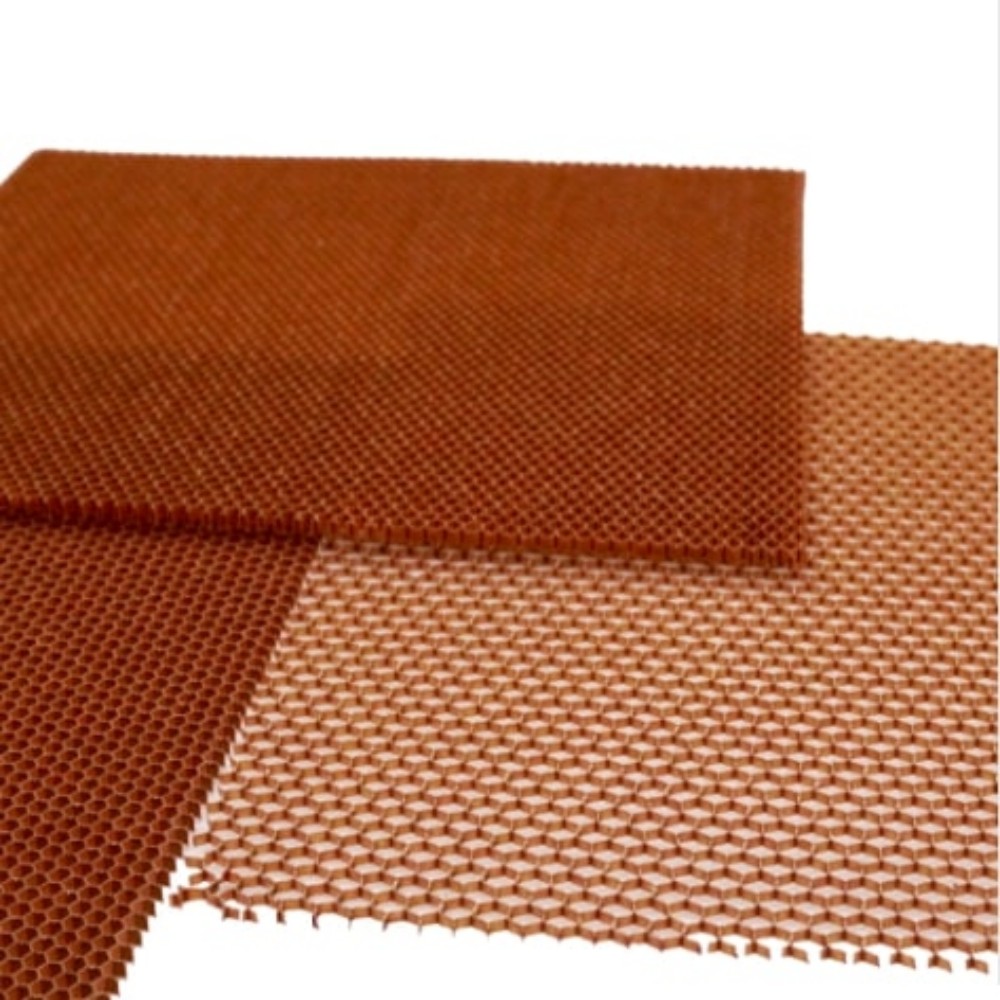
Cell size describes the dimensions of the individual hexagonal cells within the honeycomb structure.
It is one of the most important parameters affecting face sheet support, manufacturing behavior, and the performance of finished sandwich panels.
Common Aramid Honeycomb Cell Sizes
Typical nominal cell sizes available in the market include:
Cell Size | Approximate Metric Size | Typical Considerations |
1/8 inch | 3.2 mm | Fine-cell support for thin composite skins |
3/16 inch | 4.8 mm | Balance of support and manufacturing requirements |
1/4 inch | 6.4 mm | Common option for general sandwich structures |
3/8 inch | 9.5 mm | Larger-cell option for suitable panel designs |
These values are representative industry sizes, not a confirmation that every size is available in every JLON product grade.
Small Cell vs Large Cell Aramid Honeycomb
Smaller honeycomb cells provide more frequent support beneath the composite face sheets.
This can be beneficial when manufacturing thin-skinned sandwich panels or components with demanding surface requirements.
Larger cells may be appropriate for structures with thicker face sheets or different load requirements.
However, cell size alone does not determine the weight or strength of the honeycomb.
For example, two honeycomb cores with identical nominal density but different cell sizes can have different paper wall thicknesses and mechanical characteristics.
When Should You Choose Small Cell Aramid Honeycomb?
Small-cell aramid honeycomb is worth considering when composite face sheets are relatively thin, surface quality and local skin support are important, or local indentation and skin dimpling must be controlled.
It may also be appropriate for components containing detailed geometries or structural designs requiring closer cellular support.
Applications include UAV panels, precision composite components, and selected aerospace sandwich structures.
When Is Large Cell Honeycomb Suitable?
Larger-cell honeycomb may be considered when the face sheets provide sufficient local stiffness, the component has a relatively large panel area, and the selected grade meets the required compressive and shear properties.
The bonding process must also be compatible with the cell geometry.
The final selection should be verified through panel-level calculations and testing where structural performance is critical.
Understanding Aramid Honeycomb Density
Density is another critical specification when selecting aramid honeycomb core materials.
Honeycomb density is normally expressed in kilograms per cubic meter (kg/m³) or pounds per cubic foot (pcf).
It describes the mass per unit volume of the cellular core, including its solid walls and internal voids.
Common Aramid Honeycomb Density Grades
Representative density options used in composite applications include:
Nominal Density | Approximate Density (pcf) | General Selection Considerations |
29 kg/m³ | 1.8 pcf | Very lightweight sandwich construction |
32 kg/m³ | 2.0 pcf | Lightweight panels with moderate core requirements |
48 kg/m³ | 3.0 pcf | Balanced structural performance and weight |
64 kg/m³ | 4.0 pcf | Higher core load requirements |
80 kg/m³ | 5.0 pcf | More demanding structural applications |
96 kg/m³ | 6.0 pcf | Higher-density structural core applications |
Actual grade availability and mechanical performance must be confirmed against the relevant product technical datasheet.
How Does Density Affect Mechanical Performance?
Within a comparable honeycomb product family, increasing density generally increases the amount of solid material in the cellular structure.
This often improves compressive and shear properties. However, higher density also increases core weight.
The objective is therefore not to select the highest available density, but to identify the lightest grade that meets the application's structural requirements.
Low-Density Aramid Honeycomb
Low-density honeycomb may be suitable for components where weight reduction is a major priority and structural loads are relatively limited.
Typical considerations include lightweight interior panels, non-primary structures, and selected UAV components.
Medium-Density Aramid Honeycomb
Medium-density grades can provide a useful balance between weight and mechanical performance.
They are frequently considered for composite panels requiring greater core support without excessive mass.
High-Density Aramid Honeycomb
Higher-density grades may be selected for components exposed to greater compressive or shear loads.
Examples include selected structural panels and locally reinforced sandwich components.
Higher density does not automatically guarantee suitability for concentrated loads, fasteners, or impact requirements. These conditions may require inserts, potting compounds, or additional reinforcement.
How to Select the Right Cell Size and Density Together
Cell size and density should always be evaluated together.
Selecting either parameter independently can result in unnecessary weight, insufficient face sheet support, or inadequate mechanical performance.
Step 1 — Identify the Application
Start by defining the intended application.
Important considerations include whether the component is used in aerospace, UAVs, automotive, or industrial equipment; whether it is structural or non-structural; and the maximum expected loads.
Weight targets, surface quality, and dimensional accuracy should also be evaluated.
The answers help narrow the suitable honeycomb grades.
Step 2 — Evaluate the Face Sheet Material
Aramid honeycomb is frequently combined with carbon fiber and fiberglass composite skins.
The thickness, stiffness, and manufacturing process of these skins influence the required core specification.
Thin carbon fiber skins may require closer cell support, while thicker skins can distribute localized loads differently.
The face sheet and core should be designed as a complete sandwich structure.
Step 3 — Review Compressive and Shear Properties
For structural applications, density alone is insufficient.
The material specification should include relevant mechanical properties such as flatwise compressive strength, flatwise compressive modulus, core shear strength, core shear modulus, density tolerance, and thickness tolerance.
Honeycomb materials can be direction-dependent. Shear properties should be evaluated in the appropriate ribbon and transverse directions.
Step 4 — Confirm Manufacturing Compatibility
Different composite manufacturing processes impose different requirements on the core.
These may include vacuum bagging, prepreg processing, adhesive film bonding, and elevated-temperature curing.
The resin system, curing temperature, pressure, and dimensional stability must be checked before selecting a grade.
Step 5 — Test the Finished Sandwich Panel
For critical applications, the final selection should be validated using representative sandwich panels.
Testing may include bending, shear, compression, peel, impact, and environmental conditioning, depending on the design requirements.
Aramid Honeycomb for Different Applications
Aerospace and Aircraft Interior Panels
Aramid honeycomb is widely used in lightweight aircraft sandwich structures.
Typical applications include interior panels, partitions, flooring systems, and selected structural components.
For aircraft applications, cell size and density selection must be considered alongside flammability, smoke, toxicity, qualification, and traceability requirements.
The required approvals depend on the component and applicable aviation regulations.
UAV and Drone Composite Structures
Weight efficiency is particularly important in UAV design.
Aramid honeycomb can be used in selected drone structures, including equipment panels, covers, and composite sandwich components.
Fine-cell, low- to medium-density grades may be considered depending on face sheet thickness and structural loads.
The appropriate specification should be based on the UAV's actual design and manufacturing process.
Automotive Racing and Motorsport
Motorsport components frequently use carbon fiber sandwich construction to achieve low weight and high stiffness.
Aramid honeycomb may be incorporated into body panels, aerodynamic components, and selected structural assemblies.
Core density and local reinforcement must be selected according to loading conditions and the applicable motorsport requirements.
Marine and Industrial Composite Panels
Aramid honeycomb can also be considered for specialized marine and industrial sandwich panels.
However, open-cell honeycomb structures require particular attention to sealing, edge closure, and moisture ingress.
For components exposed to prolonged water contact, closed-cell foam cores may offer practical advantages.
JLON also supplies PVC foam core and PET foam core for composite applications where closed-cell core materials are preferred.
Aramid Honeycomb Thickness and Cutting Direction
Besides cell size and density, core thickness and orientation affect the performance of finished sandwich panels.
Selecting Honeycomb Core Thickness
Increasing the distance between composite face sheets can significantly improve panel bending stiffness.
However, the correct core thickness depends on panel dimensions, face sheet properties, bending and shear loads, deflection limits, buckling requirements, and overall weight targets.
A thicker honeycomb core is not necessarily stronger under every loading condition.
Understanding Honeycomb Ribbon Direction
Honeycomb manufacturing creates different material directions, commonly identified as the ribbon direction (L) and transverse direction (W).
Mechanical properties, especially shear properties, can differ between these directions.
For structural sandwich panels, the core orientation should be specified on engineering drawings and matched to the principal loading conditions.
Aramid Honeycomb Bonding and Processing Considerations
Proper bonding is essential for transferring loads between the honeycomb core and composite skins.
Adhesive Film Bonding
Structural adhesive films are commonly used in honeycomb sandwich manufacturing.
The adhesive should provide adequate bonding to the honeycomb cell edges and face sheets without excessive weight or uncontrolled flow.
Compatibility with the selected curing cycle is important.
Prepreg Composite Processing
Aramid honeycomb is often combined with carbon fiber or fiberglass prepregs.
When selecting a honeycomb grade, manufacturers should confirm the following processing requirements.
Maximum Processing Temperature: The honeycomb and its resin system must withstand the specified curing temperature without unacceptable degradation.
Curing Pressure: The core must tolerate the applied manufacturing pressure without excessive crushing or deformation.
Resin Compatibility: The honeycomb, adhesive, and prepreg resin systems should be compatible to achieve reliable bonding.
Core Dimensional Stability: The honeycomb should maintain acceptable dimensions and geometry throughout the curing process.
Bondline Requirements: The adhesive system must provide sufficient bonding between the honeycomb cell edges and composite face sheets.
Vacuum and autoclave conditions must be evaluated carefully because excessive pressure, inadequate core support, and poor bonding can contribute to manufacturing defects.
Moisture Protection and Edge Sealing
Honeycomb cores contain open cells that may retain moisture if water enters the sandwich construction.
Appropriate edge sealing, inserts, drainage strategies where applicable, and quality control are important for long-term durability.
How to Specify Aramid Honeycomb When Requesting a Quotation
A complete technical inquiry helps suppliers recommend suitable grades and prepare accurate quotations.
Recommended Aramid Honeycomb RFQ Specifications
Parameter | Information to Provide |
Material | Aramid honeycomb core |
Cell size | 3.2 mm, 4.8 mm, 6.4 mm, or required specification |
Density | Required kg/m³ or pcf |
Thickness | Required thickness in mm |
Sheet dimensions | Length × width |
Mechanical properties | Compressive and shear requirements |
Processing | Prepreg, adhesive bonding, or other method |
Curing conditions | Temperature, pressure, and duration |
Application | Aerospace, UAV, automotive, marine, or industrial |
Quantity | Sample quantity and estimated annual demand |
Certification | Required standards, test reports, and traceability |
Can Aramid Honeycomb Replace an Existing Nomex Honeycomb Grade?
In some applications, an alternative aramid honeycomb grade may be evaluated against an existing specification.
However, replacement should not be determined solely by matching cell size and density.
The evaluation should also cover resin content, mechanical properties, processing behavior, environmental performance, and any applicable qualification requirements.
For certified aerospace components, material substitution may require additional testing and formal approval.
Why Choose JLON for Aramid Honeycomb Core?
JLON supplies composite core materials for manufacturers seeking lightweight sandwich construction solutions.
Our product portfolio includes aramid honeycomb core, PP honeycomb core, PVC foam core, PET foam core, and PMI foam core, allowing customers to evaluate different core material options according to their applications.
Application-Oriented Material Selection
JLON helps customers identify suitable aramid honeycomb specifications based on cell size, density, thickness, processing requirements, and available technical data.
Multiple Composite Core Material Options
Different applications require different core materials.
JLON can support customers evaluating aramid honeycomb alongside foam core and other honeycomb materials, helping simplify sourcing across multiple composite projects.
Technical Specification and Custom Sourcing Support
For projects requiring specific sheet dimensions, density grades, or processing characteristics, JLON can coordinate technical and commercial evaluation with its manufacturing partners.
Availability and customization options are subject to specification review.
Request Aramid Honeycomb Samples and Quotations
Looking for aramid honeycomb core suppliers, 3.2 mm aramid honeycomb, 48 kg/m³ honeycomb core, or customized honeycomb sheets?
Contact JLON with your required cell size, density, thickness, sheet dimensions, and application.
Our team can help review suitable material options and provide available technical information and quotations.
Frequently Asked Questions About Aramid Honeycomb
What Is the Most Common Aramid Honeycomb Cell Size?
Cell sizes such as 3.2 mm and 4.8 mm are commonly encountered in composite sandwich applications. The appropriate size depends on face sheet thickness, loading conditions, and manufacturing requirements.
Is 48 kg/m³ Aramid Honeycomb Suitable for UAV Applications?
A 48 kg/m³ grade may be considered for certain UAV sandwich components, but suitability depends on its mechanical properties, cell size, face sheets, and structural design.
Does Higher Aramid Honeycomb Density Mean Higher Strength?
Within a comparable product family, higher density generally improves several mechanical properties, but also increases weight. Exact performance must be verified using grade-specific test data.
What Is the Difference Between 3.2 mm and 6.4 mm Honeycomb?
A 3.2 mm honeycomb has smaller cells and provides more frequent support beneath the face sheets. A 6.4 mm honeycomb has larger cells and may be suitable for different skin thicknesses and structural requirements.
Can Aramid Honeycomb Be Used with Carbon Fiber Prepreg?
Yes. Aramid honeycomb is commonly used in carbon fiber prepreg sandwich construction, provided the core, adhesive, curing conditions, and face sheets are compatible.
Is Aramid Honeycomb Waterproof?
Aramid honeycomb is not inherently waterproof as a finished core structure. Its open cells can admit moisture, so sandwich panels require appropriate sealing and environmental protection.
Can JLON Supply Customized Aramid Honeycomb Specifications?
JLON can evaluate customer requirements for cell size, density, thickness, and sheet dimensions with its manufacturing partners. Final availability depends on the requested grade and quantity.
Conclusion
Selecting the right aramid honeycomb cell size and density requires balancing structural performance, panel weight, face sheet support, and manufacturing compatibility.
Smaller cells can provide closer support for thin composite skins, while density selection helps balance mechanical properties against weight. Core thickness, material orientation, bonding methods, and environmental conditions are equally important.
For aerospace, UAV, motorsport, and industrial composite applications, the most reliable approach is to select honeycomb based on the complete sandwich structure rather than cell size or density alone.
JLON provides aramid honeycomb core materials and composite core sourcing support for customers developing lightweight sandwich structures.
Contact JLON to discuss your required specifications, technical documentation, samples, and quotation.


