



Table of Contents
Carbon fiber prepreg composites are widely used in aerospace, unmanned aerial vehicles (UAVs), high-performance sporting equipment, automotive components, and precision industrial structures. These applications often require lightweight sandwich construction, dimensional stability, and reliable mechanical performance under demanding manufacturing conditions.
Selecting the right PMI foam core for carbon fiber prepreg is essential because the core must withstand the thermal and mechanical conditions of the curing process while providing sufficient structural support in the finished composite component.
PMI (polymethacrylimide) foam is a high-performance, closed-cell structural foam widely used in advanced composite sandwich structures. Suitable PMI foam grades offer high specific mechanical properties, dimensional stability, and elevated-temperature processing capability.
JLON supplies PMI foam core materials for carbon fiber prepreg laminates, aerospace composites, UAV structures, and other lightweight sandwich applications. Material options can be selected according to density, processing temperature, mechanical requirements, and component geometry.
This guide explains how cure temperature, consolidation pressure, foam density, and processing conditions influence PMI foam core selection for carbon fiber prepreg manufacturing.
1. Why PMI Foam Is Used with Carbon Fiber Prepreg
Carbon fiber prepreg consists of carbon fiber reinforcement pre-impregnated with a controlled amount of resin. The material is typically consolidated and cured under specified temperature and pressure conditions.
When prepreg skins are combined with a lightweight core, the resulting sandwich structure can provide high bending stiffness without the weight associated with a solid laminate of equivalent thickness.
1.1 Lightweight Sandwich Construction
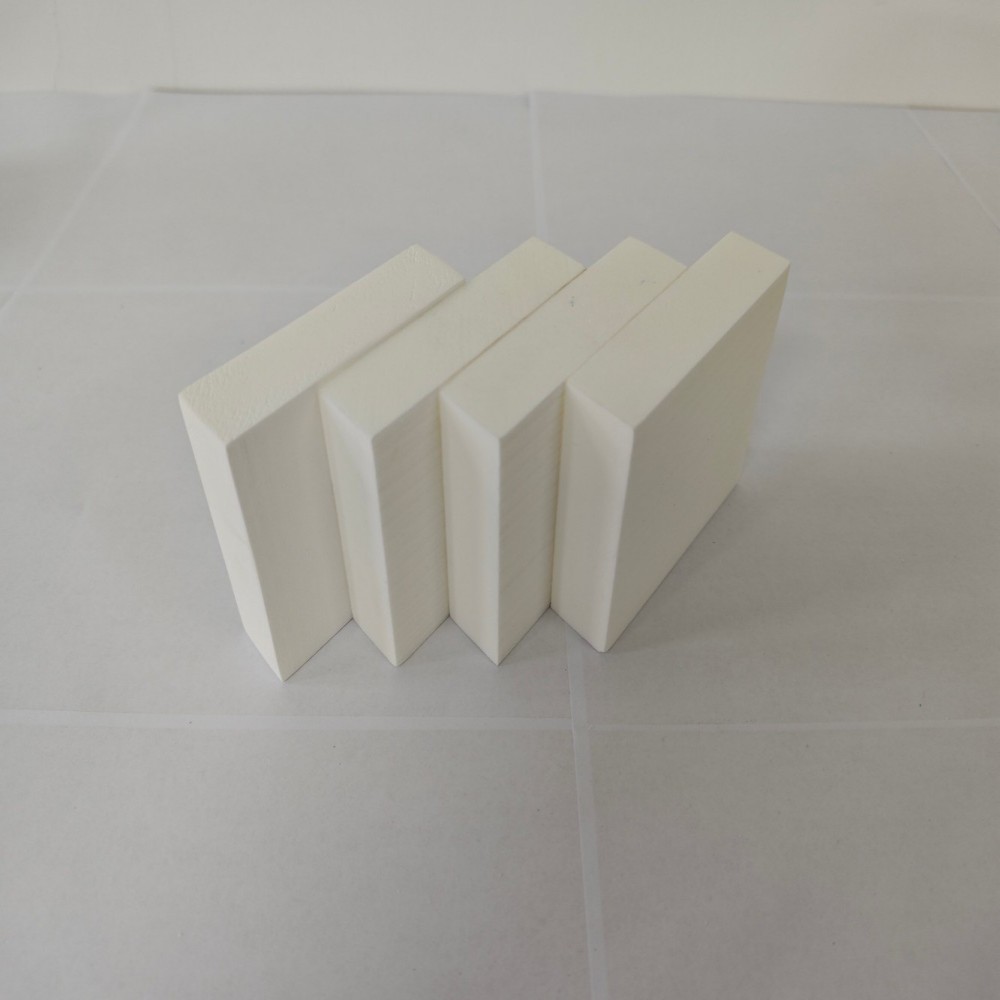
A typical carbon fiber sandwich panel contains three primary layers: an upper carbon fiber prepreg skin, a PMI foam core, and a lower carbon fiber prepreg skin.
The carbon fiber skins carry much of the tensile and compressive loading generated by bending, while the PMI foam core separates the skins and transfers shear loads between them.
This structural arrangement can significantly improve bending stiffness relative to its weight.
However, the foam core must have sufficient shear strength, shear modulus, compressive strength, and dimensional stability for the intended application.
1.2 High-Temperature Processing Capability
Many carbon fiber prepreg systems require elevated temperatures during curing.
Common nominal cure temperatures include 120°C for selected intermediate-temperature prepreg systems, 150°C for certain structural prepreg systems, and 180°C for many aerospace-grade epoxy prepreg systems.
These temperatures are examples rather than universal processing requirements. Actual cure cycles depend on the resin formulation and manufacturer's specifications.
Suitable high-temperature PMI foam grades may be compatible with these processing conditions, provided their allowable temperature, pressure, and exposure duration are verified.
1.3 Dimensional Stability
During prepreg curing, the foam core may experience thermal expansion, compressive loading, temperature gradients, resin interaction at the bonding interface, and cooling-related dimensional changes.
Excessive deformation can cause thickness variation, surface distortion, poor bonding, or dimensional inaccuracies.
Selecting a suitable PMI foam grade helps reduce these manufacturing risks.
2. Understanding Cure Temperature Requirements
Cure temperature is one of the most important factors when selecting PMI foam for carbon fiber prepreg.
A foam core that performs adequately at room temperature may not retain the same mechanical properties during elevated-temperature processing.
2.1 PMI Foam for 120°C Prepreg Curing
Some carbon fiber prepreg systems are designed for curing at approximately 120°C.
These systems are used in selected sporting goods, UAV components, industrial composite parts, and other applications.
At this processing temperature, manufacturers should evaluate the foam's compressive strength at the processing temperature, dimensional stability during heating, thermal expansion behavior, consolidation pressure, curing duration, and compatibility with the prepreg resin system.
Certain PMI foam grades may be suitable for 120°C processing, but compatibility must be established for the specific grade and cure schedule.
Core Selection Considerations
For a relatively lightly loaded component, a lower-density PMI foam may offer useful weight savings.
For a structural component exposed to higher consolidation pressure or service loads, a higher-density grade may be necessary.
The appropriate choice depends on both processing conditions and final structural requirements.
2.2 PMI Foam for 150°C Prepreg Curing
Prepreg systems cured near 150°C impose greater thermal demands on the core material.
At elevated temperatures, the compressive properties of polymer foam can differ substantially from room-temperature values.
Manufacturers should therefore examine the foam's elevated-temperature performance rather than relying exclusively on standard room-temperature technical data.
Important considerations include compression deformation under load, time-dependent creep, thermal expansion, dimensional recovery after cooling, surface integrity, and bonding performance.
Why Processing Time Matters
A foam exposed to elevated temperature for a short period may behave differently from the same material held under pressure for several hours.
The total thermal cycle, including heating, dwell, and cooling, should be considered.
2.3 PMI Foam for 180°C Prepreg Curing
Many aerospace epoxy prepreg systems use cure temperatures around 180°C.
For these applications, selecting a high-temperature PMI foam core requires careful evaluation of the entire manufacturing cycle.
Not every PMI foam grade is suitable for 180°C processing.
The foam must retain adequate properties under the combined effects of temperature, pressure, and exposure time.
Important Technical Checks
Before selecting a PMI foam core for a 180°C cure, manufacturers should verify the maximum recommended processing temperature, permitted exposure duration, elevated-temperature compressive properties, maximum allowable processing pressure, thermal dimensional stability, and compatibility with the selected resin system.
The foam manufacturer's processing recommendations and actual production trials should determine final suitability.
3. How Autoclave Pressure Affects PMI Foam Core Selection
Autoclave processing is commonly used to manufacture high-performance carbon fiber prepreg components.
During curing, elevated temperature and external pressure help consolidate the laminate, reduce void content, and improve laminate quality.
However, the applied pressure also creates mechanical demands on the foam core.
3.1 Understanding Autoclave Consolidation Pressure
Typical autoclave processing pressures vary according to the prepreg system, tooling arrangement, and component design.
Some manufacturing processes use pressures in the approximate range of 0.3–0.7 MPa, although lower or higher pressures may be specified.
These figures represent examples of processing conditions, not allowable pressure ratings for PMI foam.
The actual stress acting on the foam depends on tooling, vacuum conditions, pressure differential, laminate geometry, and load transfer.
3.2 Why Room-Temperature Compressive Strength Is Not Enough
PMI foam technical data sheets commonly report compressive strength at standard laboratory conditions.
However, a foam's mechanical response at elevated temperature may be different.
A room-temperature compressive strength value cannot automatically be treated as the allowable pressure during autoclave curing.
Manufacturers should evaluate compressive stress at the processing temperature, compressive strain under sustained loading, creep during the curing dwell, permanent thickness reduction, and localized deformation around complex geometries.
3.3 Risks of Excessive Processing Pressure
If processing pressure exceeds the foam's capability under the actual thermal conditions, several problems may occur.
Core Crushing
Excessive compressive loading can cause permanent deformation or localized crushing of the foam structure.
Thickness Variation
Uneven compression may produce inconsistent sandwich thickness, affecting dimensional tolerances and mechanical performance.
Surface Defects
Core deformation may contribute to print-through, local surface irregularities, or poor laminate consolidation.
Bonding Problems
Movement or deformation of the core during curing can interfere with consistent skin-to-core bonding.
3.4 Vacuum Bag and Out-of-Autoclave Processing
Not every carbon fiber prepreg sandwich component requires autoclave curing.
Some prepreg systems are designed for vacuum-bag-only or out-of-autoclave processing.
These processes may use lower external consolidation pressure than conventional autoclave curing, but the core still experiences a pressure differential.
Manufacturers must confirm that the PMI foam is compatible with the selected vacuum level, temperature, and curing duration.
4. PMI Foam Density Selection for Carbon Fiber Sandwich Panels
PMI foam is available in multiple density grades to support different lightweight structural applications.
Foam density influences weight, compressive properties, shear properties, processing behavior, and overall sandwich performance.
In general, increasing foam density can improve mechanical performance, but also increases component weight.
4.1 Understanding Common PMI Foam Density Ranges
The following table provides general application guidance rather than fixed engineering design limits.
PMI Foam Density | Potential Application Direction | Main Selection Consideration |
30–50 kg/m³ | Very lightweight structures and selected lightly loaded components | Weight reduction |
50–80 kg/m³ | UAV structures, lightweight sandwich panels, selected sporting goods | Balance of weight and mechanical properties |
80–110 kg/m³ | Structural sandwich components and selected prepreg applications | Improved core mechanical performance |
110–160 kg/m³ | More demanding structural components and higher local loading | Greater compressive and shear capability |
Above 160 kg/m³ | Specialized high-load areas and precision composite components | Mechanical performance and dimensional control |
Actual grade availability and performance depend on the specific PMI foam product.
Density alone does not establish whether a foam is suitable for a particular cure temperature or pressure.
4.2 Low-Density PMI Foam
Low-density PMI foam is attractive when minimizing structural weight is a primary objective.
Potential applications include selected lightweight UAV structures, aerodynamic fairings, and non-primary structural components.
However, low density does not automatically mean that a foam can withstand prepreg processing conditions.
Its compressive properties and thermal stability must be verified.
4.3 Medium-Density PMI Foam
Medium-density PMI foam may provide a useful balance between lightweight construction and structural capability.
Potential applications include UAV wing and fuselage sandwich structures, carbon fiber sporting equipment, lightweight aerospace components, and precision industrial composite panels.
Material selection should consider both the manufacturing cycle and the service loads.
4.4 High-Density PMI Foam
Higher-density PMI foam may be selected where increased mechanical properties are required.
Examples include sandwich structures with greater shear loading, localized compression, or demanding dimensional requirements.
When Higher Density May Be Necessary
Higher density may be appropriate when the core experiences greater compressive stress, higher shear properties are required, the design includes concentrated loads, or the processing cycle imposes demanding thermal and mechanical conditions.
Nevertheless, the most suitable material is not necessarily the highest-density grade.
Engineering selection should balance mechanical performance, weight, manufacturing compatibility, and cost.
5. PMI Foam vs PVC Foam and PET Foam for Carbon Fiber Prepreg
PMI, PVC, and PET foam cores are used in composite sandwich construction, but their processing capabilities and typical applications differ.
5.1 PMI Foam Core
PMI foam is commonly selected for high-performance composite applications requiring low weight, structural efficiency, and compatibility with elevated-temperature processing.
Suitable grades are used in aerospace, UAV, sporting goods, and precision industrial structures.
5.2 PVC Foam Core
PVC foam core is widely used in marine composites, industrial sandwich panels, and other fiber-reinforced structures.
It offers useful mechanical properties and multiple processing configurations.
However, standard PVC foam grades may not be suitable for elevated-temperature prepreg curing.
The specific grade and manufacturer's processing limits must be checked.
5.3 PET Foam Core
PET foam core is a thermoplastic structural foam used in wind energy, transportation, marine composites, and industrial sandwich panels.
It is available in different densities and formulations.
Some PET grades are designed for elevated-temperature processing, but suitability depends on the particular product and cure cycle.
5.4 Material Comparison
Selection Factor | PMI Foam | PVC Foam | PET Foam |
Lightweight sandwich construction | Suitable | Suitable | Suitable |
Elevated-temperature prepreg processing | Suitable grades available | Grade-dependent; often more limited | Grade-dependent |
Aerospace prepreg applications | Common in selected applications | Less common | Application-dependent |
Marine composite structures | Suitable for selected applications | Widely used | Widely used |
Wind energy sandwich structures | Specialized use | Widely used | Widely used |
Material selection priority | Thermal and structural performance | Structural performance and processing compatibility | Structural performance and processing compatibility |
No single foam material is best for every composite application.
For carbon fiber prepreg structures, processing temperature, pressure, required mechanical properties, and final component weight should determine the selection.
6. Bonding PMI Foam to Carbon Fiber Prepreg
A reliable bond between the carbon fiber skins and PMI foam core is essential for sandwich structural performance.
Even when both materials have suitable individual properties, poor interface bonding can reduce the performance of the finished component.
6.1 Surface Preparation
Before lamination, the PMI foam surface should be inspected for contamination, dust, and damage.
Depending on the foam grade and manufacturing process, suitable preparation may include removing loose dust and machining debris, checking surface cleanliness, following approved surface treatment procedures, avoiding incompatible cleaning chemicals, and protecting prepared surfaces from contamination.
6.2 Resin and Adhesive Compatibility
Some sandwich structures are manufactured through direct co-curing of prepreg skins with the foam core.
Other designs require an adhesive film or additional bonding layer.
The appropriate method depends on the resin system, foam surface characteristics, processing conditions, and structural requirements.
Adhesive Film Selection
When an adhesive film is required, manufacturers should verify compatibility with the prepreg resin, recommended curing temperature, adhesive flow behavior, bond strength, processing pressure, and required bondline thickness.
6.3 Preventing Bonding Defects
Potential defects include voids, weak adhesion, localized debonding, and uneven bondlines.
Good manufacturing practice includes appropriate surface preparation, controlled material storage, suitable vacuum bagging, and compliance with the approved cure cycle.
For critical structural components, bonding performance should be verified through representative testing.
7. PMI Foam Machining and Core Preparation
PMI foam can be supplied as sheets, blocks, or machined components, depending on grade and supplier capabilities.
For complex carbon fiber sandwich structures, CNC machining can help prepare the core to match the required geometry.
7.1 CNC Machined PMI Foam
Potential machining operations include profile cutting, thickness machining, contour milling, three-dimensional shaping, local recess machining, and preparation of complex sandwich core geometries.
Machining quality can influence fit, dimensional accuracy, and bonding consistency.
7.2 Core Thickness Selection
Core thickness is another important factor in sandwich panel design.
Increasing the distance between the carbon fiber skins can improve bending stiffness, but also changes overall thickness, core shear response, and manufacturing requirements.
The optimum thickness depends on applied bending loads, shear loads, panel dimensions, deflection limits, skin laminate design, local load introduction, and component weight targets.
7.3 Preparing Complex Geometries
Curved aerospace components and UAV structures may require precisely machined foam cores.
The core geometry should account for machining tolerances, bonding layers, and potential thermal dimensional changes during curing.
For precision components, prototype validation is recommended before full-scale production.
8. Applications of PMI Foam in Carbon Fiber Prepreg Composites
8.1 Aerospace Sandwich Structures
PMI foam is used in selected aerospace composite structures where lightweight construction and structural efficiency are important.
Potential applications include aerodynamic panels, fairings, and other engineered sandwich components.
Material selection must follow the applicable design, qualification, and processing requirements.
8.2 UAV Wings and Fuselages
UAV manufacturers frequently seek lightweight composite materials that provide sufficient stiffness and strength.
PMI foam may be used in carbon fiber sandwich structures for selected wing, fuselage, and aerodynamic components.
Important requirements include weight, core shear properties, bonding performance, and manufacturing compatibility.
8.3 High-Performance Sporting Equipment
Carbon fiber prepreg and lightweight structural cores are used in selected sporting equipment.
PMI foam may be considered where high stiffness-to-weight performance and precise composite manufacturing are required.
8.4 Precision Industrial Composite Components
Industrial applications may require carbon fiber sandwich panels with controlled weight, dimensional accuracy, and structural performance.
Examples include selected machine components, lightweight supports, and specialized equipment panels.
The required foam density and processing grade depend on the component design.
9. How to Specify PMI Foam Core for Your Project
When purchasing PMI foam for carbon fiber prepreg manufacturing, providing complete processing information helps identify suitable material options.
9.1 Technical Information Checklist
Parameter | Information to Provide |
Application | Aerospace, UAV, sporting goods, industrial |
Prepreg resin system | Epoxy or other resin type |
Cure temperature | Actual temperature and tolerance |
Cure duration | Heating, dwell, and cooling schedule |
Processing method | Autoclave, vacuum bag, out-of-autoclave |
Applied pressure | Processing pressure and vacuum conditions |
Required foam density | Target density or acceptable range |
Core thickness | Required nominal thickness |
Mechanical requirements | Compression, shear, stiffness, strength |
Dimensions | Sheet, block, or machined geometry |
Certification requirements | Applicable project-specific standards |
Annual quantity | Prototype and production demand |
9.2 Why a Processing Trial Is Important
Material compatibility should not be determined from density and room-temperature properties alone.
For demanding prepreg applications, representative manufacturing trials can help evaluate thickness retention, core deformation, skin-to-core adhesion, surface quality, dimensional accuracy, and finished sandwich mechanical properties.
Testing is especially important for elevated-temperature and high-pressure processing.
10. Why Choose JLON for PMI Foam Core Materials?
JLON supplies PMI foam core for carbon fiber prepreg, UAV composites, aerospace sandwich structures, and lightweight industrial applications.
We work with manufacturing partners to support material selection and customized supply requirements.
10.1 Multiple Density Options
JLON can assist customers in identifying PMI foam density options according to weight targets, structural requirements, and processing conditions.
Available grades and technical properties should be confirmed for each project.
10.2 Technical Specification Matching
Customers can provide an existing foam specification, target performance requirements, or processing conditions for material evaluation.
JLON can coordinate with manufacturing partners to identify potentially suitable PMI foam options.
10.3 Customized Dimensions and Processing
Depending on the selected material grade and manufacturing feasibility, JLON can support requirements for foam sheets and blocks, custom thicknesses, cut-to-size materials, CNC machined foam components.
10.4 Composite Material Supply Support
In addition to PMI foam, JLON supplies a wide range of composite materials, including PVC foam core, PET foam core, carbon fiber fabrics, fiberglass reinforcements, and vacuum processing consumables.
As a composite material supplier, JLON works with manufacturing partners to support customized material requirements and international supply.
Customers can source different composite materials for prototype development and production projects through one supplier.
11. Frequently Asked Questions About PMI Foam for Carbon Fiber Prepreg
11.1 Can PMI Foam Be Used for 180°C Carbon Fiber Prepreg Curing?
Yes. Certain high-temperature PMI foam grades can be used with carbon fiber prepreg systems cured at approximately 180°C.
However, not all PMI foam grades are suitable for this temperature.
The selection must consider curing duration, consolidation pressure, dimensional stability, and the foam's elevated-temperature mechanical properties.
JLON recommends confirming the processing requirements before selecting a PMI foam grade.
11.2 What Density of PMI Foam Is Best for Carbon Fiber Prepreg?
There is no single density suitable for every carbon fiber prepreg application.
Lower-density PMI foam can reduce component weight, while higher-density grades generally provide greater compressive and shear properties.
The appropriate density depends on structural loading, processing temperature, pressure, and weight requirements.
11.3 Can PMI Foam Withstand Autoclave Pressure?
Suitable PMI foam grades can be used in autoclave processing.
However, allowable processing pressure depends on the specific foam grade, curing temperature, exposure duration, and tooling arrangement.
Room-temperature compressive strength should not be used as the sole criterion for determining autoclave compatibility.
11.4 Is PMI Foam Better Than PVC Foam for Carbon Fiber Prepreg?
PMI foam is often preferred for demanding carbon fiber prepreg applications involving elevated curing temperatures and strict weight requirements.
PVC foam remains a practical option for many composite sandwich structures manufactured under compatible processing conditions.
The best material depends on the actual manufacturing process and structural requirements.
11.5 Can PMI Foam Be CNC Machined?
Yes. PMI foam can be CNC machined into customized shapes for composite sandwich structures.
Depending on the foam grade and manufacturing capability, processing options may include cutting, milling, contour machining, and three-dimensional shaping.
CNC machined PMI foam cores are particularly useful for UAV components, aerospace structures, and precision composite parts.
11.6 Does PMI Foam Require an Adhesive Film When Used with Carbon Fiber Prepreg?
Not always.
Some carbon fiber prepreg sandwich structures can be manufactured using direct co-curing, while others require an adhesive film to achieve the necessary bonding performance.
The bonding method depends on the prepreg resin system, PMI foam surface characteristics, curing conditions, and structural requirements.
11.7 What Information Should I Provide When Requesting PMI Foam?
To identify a suitable PMI foam core, customers should provide the intended application, required density, core thickness, curing temperature, processing pressure, and dimensional requirements.
For high-temperature prepreg applications, the complete curing cycle and required mechanical properties are particularly important.
JLON can use this information to coordinate material selection with its manufacturing partners.
12. Conclusion: Selecting the Right PMI Foam Core for Carbon Fiber Prepreg
Selecting PMI foam for carbon fiber prepreg requires more than choosing a suitable density.
The foam core must be compatible with the manufacturing process and provide adequate mechanical performance in the finished sandwich structure.
Three factors are particularly important:
Cure Temperature: The selected PMI foam must maintain sufficient thermal stability throughout the prepreg curing cycle.
Processing Pressure: The foam must withstand the actual consolidation conditions without unacceptable compression, creep, or dimensional deformation.
Core Density: Density should be selected according to structural requirements, weight targets, and processing conditions rather than using a single grade for every application.
For aerospace composites, UAV structures, sporting equipment, and precision industrial components, suitable PMI foam core materials can provide an effective combination of lightweight construction, structural performance, and elevated-temperature processing capability.
Find the Right PMI Foam Core with JLON
JLON supplies PMI foam core materials for carbon fiber prepreg and advanced composite sandwich applications.
Whether you require standard PMI foam sheets, customized thicknesses, or CNC machined foam cores, JLON can help evaluate suitable material options based on your technical specifications.
Explore our PMI Foam Core products or contact JLON with your required density, curing temperature, processing pressure, and dimensions.
Contact JLON today to discuss your PMI foam core requirements and request technical information or a quotation.


