



Table of Contents
Foam core sandwich construction is widely used in modern boat building because it can provide high stiffness at a much lower weight than solid fiberglass laminates. When the core material, laminate design, resin system, manufacturing process, and local reinforcement are correctly matched, sandwich panels can deliver reliable long-term performance in hulls, decks, bulkheads, transoms, stringers, and superstructures.
However, foam core structures are not automatically failure-proof. Problems can occur when the foam is incorrectly selected, poorly bonded, exposed to excessive heat, inadequately reinforced around hardware, or installed without sufficient process control. Some defects become visible during production, while others develop gradually after the vessel enters service.
This article explains the most common foam core failures in boat building, why they occur, and how they can be prevented. It also discusses how appropriate PVC foam core, PET foam core, density, thickness, surface treatment, and processing configurations can reduce structural and production risks.
Why Foam Core Sandwich Panels Fail
A marine sandwich panel normally consists of two strong outer skins bonded to a lightweight core. The skins carry tensile and compressive loads, while the core separates the skins, transfers shear forces, and stabilizes the panel against buckling.
Failure can begin in the outer skins, the bond line between the skin and core, the foam itself, or a local detail such as a fastener, insert, joint, opening, or laminate transition.
Many visible cracks are only symptoms of a deeper problem. For example, cracking around a deck fitting may result from insufficient high-density reinforcement beneath the fitting rather than from a weak surface laminate. Effective prevention therefore requires designers and boat builders to consider the complete sandwich structure instead of evaluating the foam core alone.
1. Skin-to-Core Delamination
Delamination is the separation of the laminate skin from the foam core. It is one of the most serious sandwich panel defects because the panel loses the interaction between its skins and core.
Even a relatively small delaminated area can substantially reduce local stiffness. The damaged area may continue to expand under wave impact, vibration, or repeated flexing.
Common Causes of Delamination
Delamination can be caused by contaminated foam surfaces, insufficient resin or adhesive, poor resin flow during vacuum infusion, incomplete wet-out during hand lay-up, incorrect curing conditions, or movement of the foam before the laminate has cured.
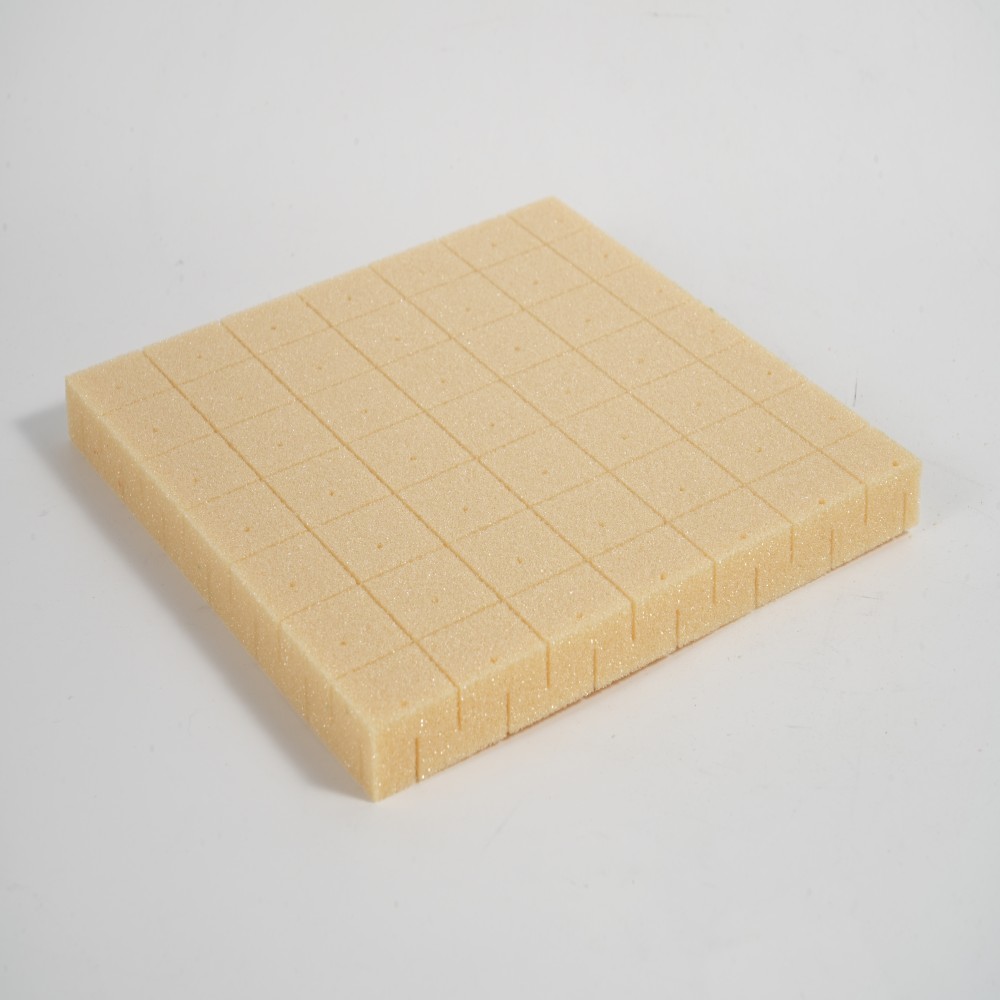
Air trapped beneath scored, perforated, or grooved sheets can also create local voids. In service, impact and repeated panel flexing may cause an initially small bonding defect to grow.
Before production begins, the boat builder should confirm that the selected marine foam core is compatible with the intended resin, bonding adhesive, processing temperature, and forming method.
How to Prevent Delamination
The bonding surface must be clean, dry, and free from release agents, oil, grinding residue, loose dust, and other contamination. A surface that looks clean may not necessarily be ready for bonding, so a consistent preparation and inspection procedure should be established.
During hand lay-up, enough resin or core bonding adhesive must be applied to achieve continuous contact without leaving dry areas. During vacuum infusion, the foam surface configuration should be selected according to the resin flow plan. Perforated, grooved, scored, and double-cut foam sheets may behave differently during infusion.
The vacuum bag should be leak-tested before resin is introduced. During infusion, operators should monitor resin arrival, vacuum pressure, temperature, and any area where inserts, reinforcement overlaps, tight curvature, or changes in core thickness could interrupt resin flow.
2. Core Shear Failure
Core shear failure occurs when the internal shear stress exceeds the mechanical capacity of the foam core. It may appear as a diagonal crack through the foam, local crushing followed by cracking, or a noticeable loss of panel stiffness.
High structural loads, repeated hull slamming, incorrect density selection, excessive support spacing, and insufficient panel thickness can all contribute to core shear failure.
Where Core Shear Failure Is Most Likely
The risk is generally higher in high-speed hull bottoms, patrol boats, workboats, transoms supporting outboard motors, engine foundations, heavily loaded decks, narrow unsupported panels, and areas with abrupt structural transitions.
These areas should not automatically use the same foam density and laminate construction as lightly loaded interior panels or superstructures.
How to Prevent Core Shear Failure
Foam density should be selected according to engineering loads rather than price or weight alone. Low-density marine foam may be appropriate for lightly loaded panels, while hull bottoms, transoms, machinery foundations, and heavily loaded structural zones may require higher-density structural foam core.
Increasing the core thickness can significantly improve panel stiffness, but it does not remove the need to verify shear stress, skin strength, panel deflection, fatigue performance, and concentrated loads.
For classed vessels, commercial boats, patrol craft, and other demanding projects, the laminate schedule and foam core selection should comply with the relevant design rules and project requirements.
3. Local Core Crushing Around Fasteners and Hardware
Winches, cleats, rails, hinges, seats, engines, and other fittings introduce concentrated loads into a sandwich panel. If bolts are tightened directly through ordinary low-density foam, the foam can compress beneath the fitting.
As the foam compresses, the fitting may become loose, the surrounding laminate may crack, and the sealant may lose contact. Water can then enter the sandwich structure through the damaged penetration.
Proper Reinforcement of Hardware Locations
Loaded fittings should be identified during the design stage. Depending on the expected load, the local foam may need to be replaced with a high-density foam insert, structural insert, or solid laminate.
Another common method is to remove the foam around an oversized drilled hole, fill the cavity with a suitable high-density compound, allow the compound to cure, and then drill the final fastener hole through the filled area.
Load-spreading washers or backing plates may also be required. For highly loaded fittings, the local skin laminate may need to be increased so that the load can be distributed over a larger area.
The reinforced area must extend far enough beyond the fastener group to distribute the load effectively. Adding only a small quantity of filler around each bolt may not be sufficient for winches, cleats, machinery mounts, or other high-load equipment.
Avoid Overtightening
Even a correctly designed high-density insert can be damaged by uncontrolled bolt torque. Suitable washers or backing plates should be used, and the equipment manufacturer’s tightening requirements should be followed.
Fasteners should also be inspected periodically because vibration and cyclic loading can reduce clamping force or damage the surrounding sealant over time.
4. Water Ingress and Freeze-Thaw Damage
Closed-cell PVC foam core has low water absorption, but the foam itself should never be treated as the only barrier against water.
Water usually enters through poorly sealed fasteners, damaged skins, exposed cut edges, drains, windows, hatches, fittings, or incorrectly finished penetrations.
After entering the panel, water can travel along cracks, grooves, kerfs, voids, or poorly bonded interfaces. It may corrode metal inserts, increase the weight of the structure, worsen delamination, and damage adjacent materials.
In cold climates, repeated freeze-thaw cycles can enlarge existing cracks and voids.
How to Keep Water Out of Cored Panels
Every penetration through a foam core sandwich panel should be treated as an engineered detail.
Where appropriate, the hole should first be drilled oversize. The exposed foam around the hole should then be removed, and the cavity should be filled with a compatible high-density sealing compound. After the compound has cured, the final hole can be drilled through the filled plug.
This method creates a sealed barrier between the fitting and the surrounding foam core.
Exposed foam edges should be closed with laminate, adhesive, or another approved edge treatment. Sealants around deck hardware should be selected for the substrate and inspected throughout the service life of the vessel.
A small leak should be repaired promptly. Additional sealant should not simply be applied over wet or damaged material without first identifying and repairing the underlying problem.
5. Resin Exotherm and Heat Damage
Polyester, vinyl ester, and epoxy resin systems release heat while curing. Thick resin accumulations, filled cavities, large bonding masses, or an uncontrolled curing reaction can produce temperatures high enough to distort or damage the foam core.
Heat exposure can also come from dark-colored external surfaces, engines, exhaust systems, heated molds, hot process equipment, and post-curing operations.
Each foam grade has defined processing-temperature and service-temperature limits. These limits should not be treated as interchangeable.
How to Prevent Thermal Damage
The temperature resistance of the selected foam should be checked under both manufacturing and service conditions.
Production personnel should control the shop temperature, resin batch size, catalyst or hardener ratio, laminate thickness applied during each curing stage, and the volume of bonding adhesive.
Large core cavities should not be filled with a highly exothermic resin system in a single operation unless the complete process has been tested and validated.
When heated molds or post-curing processes are used, the temperature should be increased at a controlled rate. Structures installed close to engines, exhaust systems, or other heat sources may require additional insulation or a more heat-resistant material.
6. Print-Through, Dimpling, and Surface Distortion
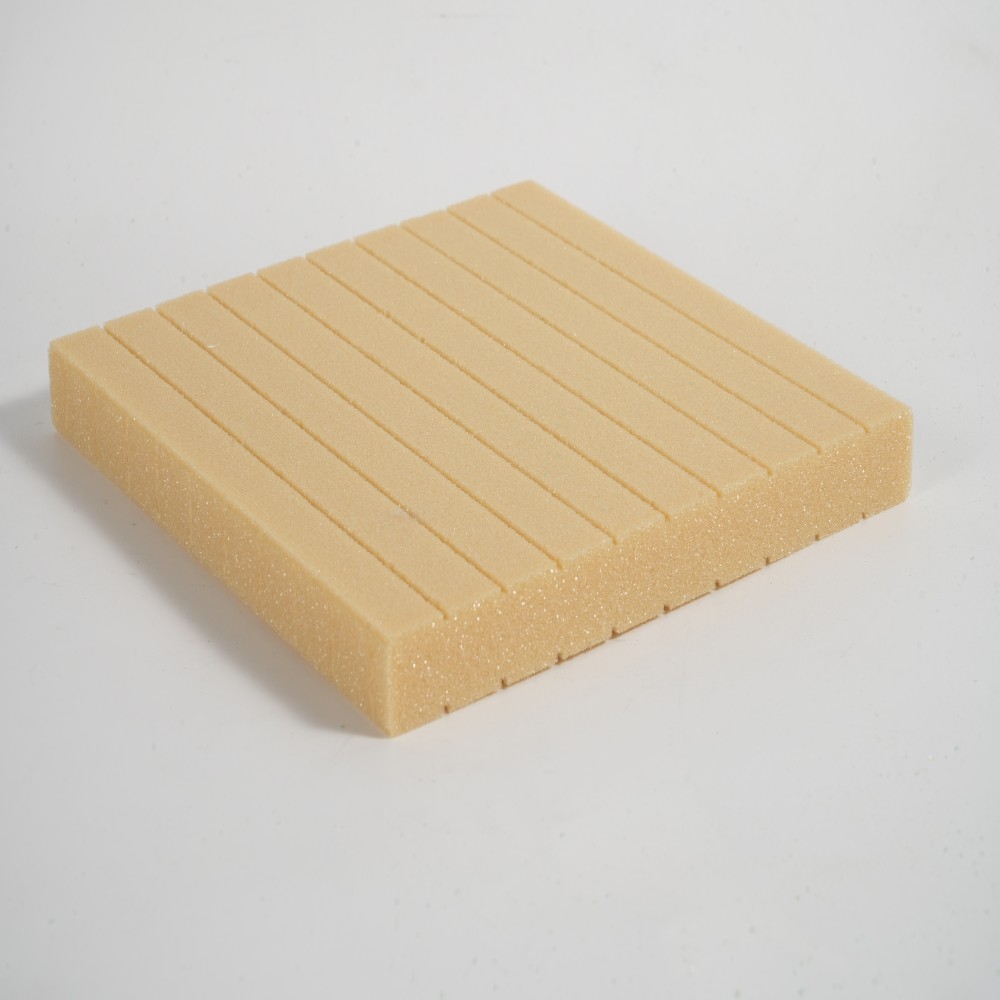
Not every foam-related defect causes immediate structural failure. Core grooves, scoring patterns, sheet joints, and local changes in density may sometimes become visible through the finished surface. This effect is commonly called print-through.
Uneven vacuum pressure, thin outer skins, resin shrinkage, excessive curing temperature, wide foam joints, and poorly filled gaps can increase the risk.
Print-through is particularly important in yacht hulls, decks, and other components where a high-quality cosmetic finish is required.
How to Improve Surface Quality
The foam configuration should match the mold curvature and surface-quality requirement. Foam joints should be kept tight, and unavoidable gaps should be filled with a compatible core bonding material rather than neat resin.
A balanced laminate construction and controlled curing temperature can also reduce surface distortion.
For highly visible yacht components, a production trial can help determine the appropriate skin thickness, surface veil, resin system, foam surface configuration, and curing cycle.
Core sheets should lie naturally against the mold. Forcing a stiff sheet into a tight compound curve may cause spring-back, bridging, local voids, or resin-rich areas.
7. Poorly Fitted Core Joints and Resin-Rich Gaps
Large gaps between foam sheets do not become reliable structural details simply because they are filled with resin.
Neat resin is heavier and often more brittle than the surrounding foam core. Wide resin-rich joints may shrink during curing, become visible through the finished surface, and create local stress concentrations.
These joints can also affect resin flow during vacuum infusion.
Better Core-Fitting Practice
Foam sheets should be carefully cut and dry-fitted before lamination. Templates or digital cutting may be useful for complex shapes and repeated parts.
Multiple joints and structural discontinuities should not be aligned in the same highly stressed area. Where the design requires staggered joints, the production team should follow the specified arrangement.
Approved gaps should be filled with a suitable core bonding paste according to the adhesive supplier’s recommendations. Changes in core thickness should use a designed taper or transition rather than an abrupt step.
8. Impact Damage and Hidden Debonding
A sandwich panel may appear almost undamaged after a tool drop, collision, grounding event, or heavy deck impact. However, the foam or bond line beneath the surface may already be cracked or crushed.
This type of hidden damage can grow when the panel is repeatedly loaded. The visible surface condition alone may therefore underestimate the extent of the damage.
Preventing and Detecting Impact Damage
Impact-prone areas may require higher-density foam, tougher outer skins, additional reinforcement, or protective surface layers.
Hull bottoms, working decks, bow sections, loading zones, and areas exposed to equipment movement should be evaluated according to the vessel’s actual operating conditions.
After a significant impact, the inspection should extend beyond the visible surface. Tap testing may help identify changes in acoustic response. Ultrasonic inspection, thermography, or other non-destructive testing methods may be appropriate for critical structures.
Repairs should extend to sound laminate and undamaged core. Covering a damaged area without removing crushed or debonded material will not restore the original structural load path.
9. Fatigue Cracking from Repeated Flexing
Boats are exposed to wave impact, vibration, machinery loads, temperature changes, and repeated pressure cycles.
A panel that survives one maximum load may still develop fatigue damage if it flexes excessively during normal operation.
Fatigue cracks often begin near hard points, openings, bulkhead terminations, unsupported edges, hardware, or sudden changes in laminate stiffness.
How to Improve Fatigue Resistance
Panel deflection should be controlled through the appropriate combination of core thickness, foam density, skin laminate, support spacing, and structural geometry.
Load transitions should be smooth. Stiffeners and bulkhead tabs should not end abruptly in highly stressed panels.
Openings and corners around hatches, windows, doors, and access panels may require additional reinforcement.
Manufacturing quality is equally important. Voids, dry fibers, reinforcement wrinkles, poor secondary bonding, and incorrectly positioned reinforcement can reduce fatigue life even when the specified foam core and laminate construction are theoretically adequate.
10. Incorrect Foam Selection for the Process or Application
No single foam core is ideal for every part of a boat.
Choosing a foam only according to its density can be misleading because different foam families and grades may have different shear properties, compression strength, elongation, fatigue resistance, temperature resistance, resin compatibility, and processing behavior.
The material should be selected according to both the structural application and the intended manufacturing process.
PVC Foam Core in Boat Building
PVC foam core for boats is widely used in hulls, decks, bulkheads, transoms, stringers, and other structural sandwich components.
It offers a useful combination of low weight, closed-cell structure, mechanical performance, and compatibility with common marine composite manufacturing processes.
Different densities and surface treatments allow PVC foam core to be used in flat panels, single-curvature structures, and compound-curvature components.
Depending on the project, PVC foam can be supplied as plain, perforated, grooved, scored, or double-cut sheets for hand lay-up, vacuum bagging, and resin infusion.
PET Foam Core in Boat Building
PET foam core is a thermoplastic material used in marine, wind energy, transportation, and industrial sandwich panels.
It can be attractive where recyclability, processing efficiency, and cost-performance balance are important.
However, the selected PET foam grade must still be evaluated for shear strength, compression performance, fatigue resistance, processing temperature, resin uptake, and the specific marine loading environment.
PET foam should not automatically be substituted for PVC foam solely because the two materials have a similar nominal density.
Selecting the Right Density and Configuration
Instead of asking only which foam density is normally used, the customer should provide information about the vessel type, operating speed, application location, design loads, support spacing, required core thickness, and resin system.
The supplier should also know whether the production process uses hand lay-up, vacuum bagging, resin infusion, or another method.
Mold curvature, processing temperature, service temperature, classification requirements, and the location of fasteners, inserts, machinery, and other high-load zones should also be considered.
This information makes it possible to identify a more appropriate marine foam core grade, density, thickness, and surface configuration.
Quality Control During Boat Production
Preventing foam core failures requires consistent production control, not only a correct technical datasheet.
Incoming Material Inspection
Incoming foam should be checked for the correct product identification, density, thickness, dimensions, surface configuration, and visible condition.
Foam sheets should be stored flat, clean, and dry. They should be protected from excessive heat, direct sunlight, contamination, and physical damage.
Batch traceability should be maintained for critical marine and classification projects.
Manufacturing Process Control
Important production information should be recorded, including resin mixing ratios, gel time, material temperature, mold temperature, vacuum level, leak-test results, resin consumption, curing time, and post-curing conditions.
Production workers should be trained to identify bridging, dry laminate, open foam joints, contaminated surfaces, poorly seated inserts, and incomplete resin flow.
Final Inspection
High-load areas, penetrations, hardware locations, foam joints, inserts, and bond lines should be inspected before they become inaccessible.
Depending on the vessel and quality-control plan, inspection may include visual examination, tap testing, dimensional checks, production coupon testing, or non-destructive testing.
Any significant deviation should be evaluated before the component proceeds to final assembly.
How JLON Supports Marine Composite Projects
JLON supplies PVC foam core, PET foam core, fiberglass reinforcement, and vacuum process materials for composite boat building.
As a composite materials supplier working with manufacturing partners, JLON can help customers compare foam densities, thicknesses, sheet sizes, surface treatments, and processing options for different marine applications.
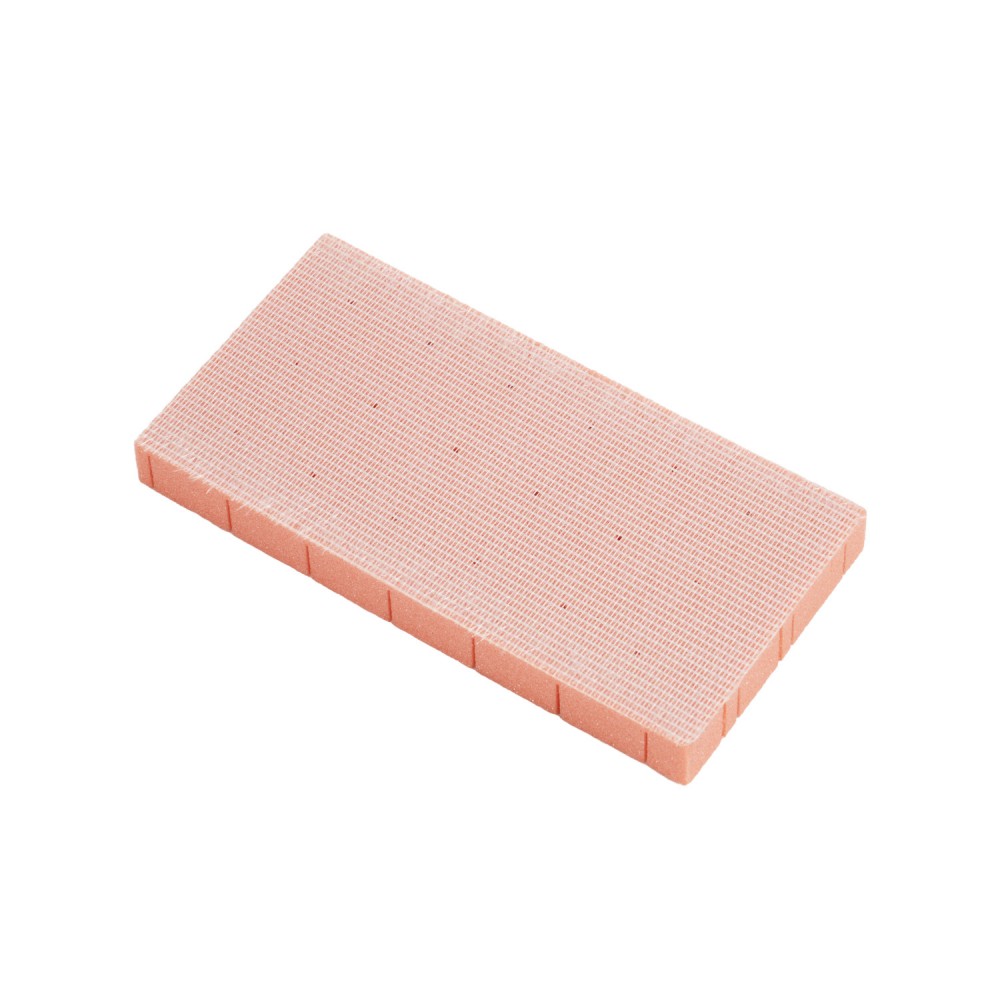
Available foam core configurations may include plain sheets, perforated sheets, grooved sheets, scored sheets, contour-cut sheets, grooved and perforated sheets, and double-cut sheets for resin infusion or curved sandwich structures.
Product availability and recommendations should be confirmed according to the required density, thickness, resin system, production process, application, and project certification.
For marine projects, JLON can support material selection by reviewing the application area, production method, target panel construction, required specifications, and commercial requirements.
Final structural design, laminate calculations, and regulatory approval remain the responsibility of the vessel designer, boat builder, or relevant classification authority.
Frequently Asked Questions
Can Bolts Pass Directly Through PVC Foam Core?
Ordinary low-density foam should not carry high bolt compression loads directly.
Loaded fasteners normally require a high-density foam insert, filled plug, backing plate, solid laminate, or another engineered reinforcement detail.
The appropriate solution depends on the type of fitting, expected load, fastener arrangement, and surrounding laminate construction.
Does Closed-Cell Foam Completely Prevent Water Damage?
No. Closed-cell PVC foam provides low water absorption, but water can still travel through cracks, open joints, grooves, voids, damaged skins, and poorly bonded areas.
Fastener holes, drains, cut edges, windows, hatches, and other penetrations must therefore be properly sealed.
Is Higher-Density Foam Always Better for Boat Building?
No. Higher-density foam generally provides greater compression and shear performance, but it also increases weight and material cost.
The correct approach is to select a suitable foam density for each structural zone and use local high-density inserts where concentrated loads occur.
Using high-density foam throughout the entire vessel may add unnecessary weight without providing a corresponding structural benefit.
Should I Choose PVC Foam Core or PET Foam Core?
The choice depends on structural loads, fatigue requirements, operating temperature, manufacturing process, resin uptake, sustainability goals, certification, availability, and budget.
PVC foam core is widely used in demanding marine structural applications because of its balanced mechanical properties and processing versatility.
PET foam core can offer advantages in recyclability and cost-performance for suitable sandwich panel applications.
Both materials can be used successfully in boat building when the correct grade, density, thickness, and surface configuration are matched to the application.
Conclusion
Most foam core failures in boat building are preventable. The key is to treat the sandwich panel as a complete engineered system.
Correct foam selection must be combined with reliable skin-to-core bonding, controlled manufacturing, sealed penetrations, reinforced hardware zones, smooth structural transitions, and inspection throughout production and service.
Choosing a suitable marine PVC foam core or PET foam core for boat building should begin with the vessel type, application area, design loads, manufacturing process, and operating environment—not density alone.
Contact JLON to discuss PVC foam core, PET foam core, fiberglass reinforcement, and vacuum consumables for your marine composite project.
Share your required density, thickness, sheet format, resin system, production process, and application so that JLON can help identify suitable material options for further technical evaluation.