


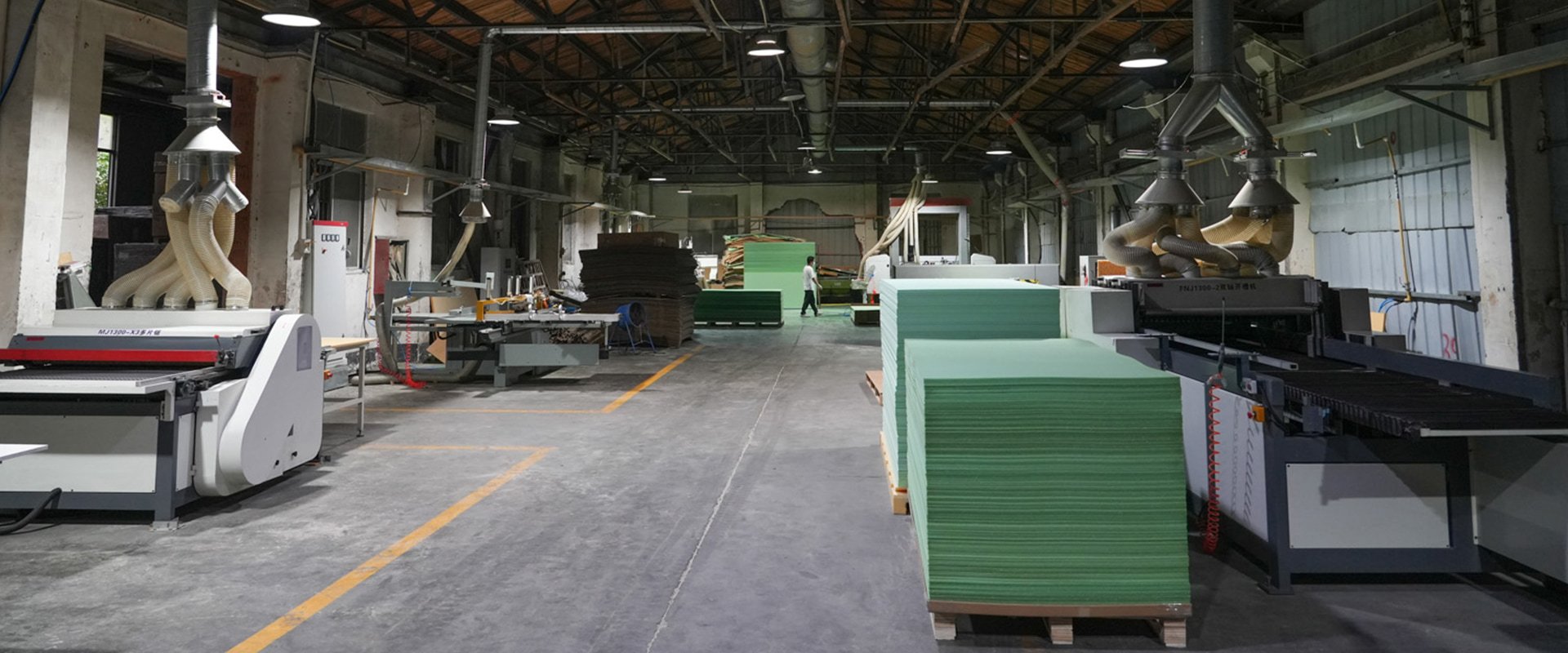

Choosing the right core material is one of the most important decisions in composite yacht construction. The core may account for only part of the total sandwich structure, but it has a major influence on weight, stiffness, impact resistance, fatigue performance, water resistance, processing efficiency, and ultimately the service life of the yacht.
There is no single core material that is best for every part of a yacht.
PVC foam, PET foam, balsa, PP honeycomb, and high-performance honeycomb materials all have advantages in specific applications. A yacht builder may even use several different core materials and densities within the same vessel, depending on structural loads, manufacturing processes, weight targets, and cost.
For most fiberglass and composite yachts, PVC foam remains one of the most balanced structural core choices for hulls, decks, and other load-bearing sandwich structures. PET foam can offer a cost-effective and recyclable alternative for selected structural areas, while balsa remains relevant where high stiffness and compressive performance are important. Honeycomb cores are particularly useful when very low weight is required, especially in interior panels or specialized high-performance structures.
This 2026 guide explains how to select core materials for different areas of a yacht and how PVC foam, PET foam, balsa, and honeycomb compare in practical yacht construction.
Why Are Core Materials Used in Yacht Construction?
Modern composite yachts are commonly built using sandwich construction.
A typical sandwich panel consists of:
An outer fiberglass or carbon fiber laminate
A lightweight core material
An inner composite laminate
Instead of increasing laminate thickness to achieve stiffness, the core separates the two structural skins. Increasing this distance can significantly improve bending stiffness without adding the weight associated with a thick solid laminate.
This makes sandwich construction particularly attractive for yacht builders seeking:
Lower vessel weight
Higher panel stiffness
Improved fuel efficiency
Better sailing performance
Increased interior space
Improved thermal and acoustic insulation
Reduced laminate material consumption
However, the core also transfers shear loads between the skins. Its mechanical properties therefore matter.
Hull bottoms exposed to slamming loads have very different requirements from interior partitions. Deck areas around winches, cleats, rails, engines, or other hardware also require different core properties from lightly loaded superstructures.
For this reason, professional yacht construction normally requires different core densities or even different core materials in different areas of the vessel.
What Are the Best Core Materials for Yacht Construction?
The main core materials considered in modern composite yacht construction include:
PVC foam core
PET foam core
End-grain balsa
PP honeycomb
Aramid honeycomb
Specialized materials such as PMI foam can also be used in very high-performance composite structures, particularly when elevated-temperature processing or extremely high specific mechanical performance is required. However, PMI is generally not the first choice for conventional yacht construction because its additional performance comes with considerably higher material cost.
For most production yachts and FRP boats, the practical comparison is therefore mainly between PVC foam, PET foam, balsa, and selected honeycomb materials.
1. PVC Foam Core — A Balanced Choice for Structural Yacht Components
Cross-linked PVC foam is one of the most established structural core materials used in marine sandwich construction.
Its combination of mechanical performance, closed-cell structure, fatigue resistance, processing flexibility, and resistance to water absorption makes it suitable for many structural areas of a yacht.
Typical applications:
Yacht hulls
Hull sides
Decks
Bulkheads
Superstructures
Stringers
Transoms
Structural sandwich panels
PVC foam is available in a wide range of densities. This allows yacht designers to increase core density only where additional mechanical performance is required.
Lower-density foam can be used in lightly loaded areas, while higher-density PVC can be introduced around concentrated loads and structural attachments.
Why PVC Foam Is Popular in Yacht Construction
Important advantages include:
Low water absorption: The closed-cell structure provides good resistance to water penetration, an important consideration for long-term marine service.
Good fatigue performance: Yacht structures experience repeated wave, vibration, and slamming loads. Fatigue resistance therefore matters as much as initial mechanical strength.
Wide density range: Using different PVC densities allows designers to optimize weight and mechanical performance throughout a vessel.
Good processing flexibility: PVC foam can be supplied as plain sheets or with cuts, grooves, perforations, and contour configurations for curved yacht structures and resin infusion.
Compatibility with common composite processes: Marine-grade PVC foam is widely used with fiberglass and carbon fiber sandwich structures manufactured using hand lay-up, vacuum bagging, resin infusion, RTM, and other composite processes.
For many conventional and performance yacht projects, PVC foam therefore provides a strong balance between structural performance, processing reliability, durability, and cost.
2. PET Foam Core — Increasingly Important for Cost and Sustainability
PET foam is a thermoplastic structural foam made from polyethylene terephthalate.
It has become increasingly important in large composite structures because it combines useful mechanical properties with relatively competitive material cost.
Another important advantage is sustainability. PET foam can be manufactured partly from recycled PET feedstock, and the thermoplastic nature of PET gives it a different sustainability profile from conventional thermoset-based core materials.
Typical yacht applications:
Deck structures
Superstructures
Bulkheads
Interior structural panels
Large sandwich panels
Selected hull areas where mechanical requirements permit

PET is particularly interesting for builders producing larger volumes of composite panels where material cost becomes an important consideration.
However, PVC and PET should not be considered automatically interchangeable.
Their shear properties, fatigue behavior, elongation, resin absorption, processing behavior, and performance at different densities can vary considerably between individual grades.
The correct decision should therefore be based on the actual datasheet and structural requirements rather than selecting a material only because both products are classified as structural foam.
3. Balsa Core — High Stiffness with Different Moisture Considerations
End-grain balsa has been used in marine sandwich structures for many years and remains an important core material.
Its cellular wood structure provides strong compressive and shear properties at relatively low weight.
Typical yacht applications:
Yacht hulls
Decks
Bulkheads
Transoms
Large structural sandwich panels
One of its important advantages is its mechanical performance, particularly where high stiffness and compressive strength are required.
However, balsa behaves differently from closed-cell polymer foam.
Correct sealing, installation, bonding, and protection from water penetration are especially important. If a laminate is damaged or penetrations around fittings are not properly sealed, moisture management can become a greater concern.
Modern yacht builders therefore normally evaluate balsa not simply on initial mechanical performance but also on manufacturing consistency, water protection, long-term maintenance, and repair strategy.
Balsa remains a technically valid material. PVC foam should not be presented as universally superior to balsa; they simply offer different combinations of properties and manufacturing characteristics.
4. PP Honeycomb — Best Suited to Lightweight Interior Panels
Polypropylene honeycomb has a very different structure from structural foam.
Instead of a solid cellular foam structure, PP honeycomb consists of a lightweight honeycomb geometry that provides good panel stiffness at very low weight.
Typical yacht applications:
Interior partitions
Furniture panels
Cabinet panels
Floors
Ceiling panels
Doors
Non-primary structural sandwich panels

The biggest advantage is weight reduction combined with competitive material cost.
For large interior panels, replacing plywood or other heavy materials with lightweight honeycomb sandwich panels can contribute to meaningful vessel weight savings.
However, PP honeycomb would not normally be the first recommendation for highly loaded primary yacht hull structures.
Bonding behavior, local compression, skin adhesion, impact requirements, edge treatment, and hardware installation must all be considered carefully.
For this reason, PP honeycomb is generally more suitable for yacht interiors and selected secondary panels than for primary hull structures.
5. Aramid Honeycomb — For Specialized High-Performance Yachts
Aramid honeycomb offers exceptionally low weight and high stiffness-to-weight performance.
It is well established in aerospace structures and can also be found in high-performance marine applications.
Typical yacht applications:
Racing yachts
High-performance sailing structures
Carbon fiber sandwich components
Lightweight interior structures
Specialized competition vessels

Aramid honeycomb becomes attractive when minimizing structural weight is more important than minimizing material cost.
However, it requires careful processing and edge treatment, and the material cost is considerably higher than that of conventional PVC, PET, or PP core materials.
As a result, it should be considered a specialized performance solution rather than the standard core for conventional yacht construction.
Best Core Material for Different Parts of a Yacht
A more useful question than “Which core material is best?” is: Which core material is best for each part of the yacht?
The answer changes significantly according to the structure.
Yacht Hulls
For fiberglass yacht hulls, PVC foam is often one of the first materials considered.
Hull structures can experience:
Wave loading
Slamming
Repeated fatigue loading
Local impact
Hydrostatic pressure
Long-term exposure to a marine environment
For these reasons, water resistance, shear properties, fatigue performance, and reliable skin-to-core bonding are particularly important.
Typical material choices: PVC foam, PET foam (selected designs), Balsa
For lightweight racing structures, specialized foam or honeycomb solutions may also be considered.
Yacht Decks
Decks experience a combination of distributed loads and concentrated loads from people, equipment, winches, rails, cleats, masts, and deck hardware.
Common core options: PVC foam, PET foam, Balsa
Higher-density inserts are normally required around hardware mounting points.
Using one density throughout the entire deck is usually not the most efficient solution. A better design can use lower-density material across general areas and locally increase density around high-load positions.
Yacht Superstructures
Weight located high on a yacht can strongly influence the center of gravity and vessel stability.
Superstructures therefore benefit significantly from lightweight sandwich construction.
Possible materials: Lower-density PVC foam, PET foam, Lightweight honeycomb
The correct material depends on structural load, panel dimensions, fire requirements, exterior exposure, and manufacturing method.
Yacht Bulkheads
Bulkheads may be structural or non-structural.
Structural bulkheads require adequate shear and compression performance and good bonding between the core and laminate.
PVC and PET foam are commonly considered for these applications.
For non-structural interior partitions, PP honeycomb may provide a lower-weight and lower-cost solution.
Yacht Interior Panels
Interior panels generally do not require the same mechanical performance as hull bottoms. This makes them ideal areas for significant weight optimization.
Common materials: PP honeycomb, PET foam, Lightweight PVC foam, Aramid honeycomb (premium lightweight construction)
Applications include furniture, cabinets, partitions, doors, floors, and ceiling panels.
Using an expensive high-density structural foam in all interior areas would normally add unnecessary material cost and weight.
Typical PVC Foam Density Selection for Yacht Construction
PVC foam density should be selected according to structural loading rather than yacht size alone. The following ranges can be used as a preliminary reference:
Yacht Application | Typical PVC Foam Density |
|---|---|
Lightweight superstructures and secondary panels | 45–60 kg/m³ |
General hull and deck sandwich structures | 60–100 kg/m³ |
Higher-load hull, deck and structural areas | 100–130 kg/m³ |
High-load inserts and reinforced local areas | 130–200 kg/m³ |
Hardware fixing and very high local compression areas | 200–250 kg/m³ |
These ranges are general selection guidance rather than structural design values.
Actual density should be determined according to laminate design, core thickness, vessel size, expected loading, safety factors, manufacturing process, classification requirements, and the mechanical properties of the specific foam grade.
In many yachts, the most effective design uses several different densities within the same structure.
PVC vs PET vs Balsa vs Honeycomb for Yachts
Comprehensive performance comparison of all mainstream yacht core materials:
Property | PVC Foam | PET Foam | Balsa | PP Honeycomb | Aramid Honeycomb |
|---|---|---|---|---|---|
Structural performance | High | Medium–High | High | Medium | Very High |
Water resistance | Excellent | Good | Requires careful sealing | Excellent material resistance | Requires careful panel sealing |
Weight | Low | Low | Medium | Very Low | Extremely Low |
Fatigue performance | Good | Grade dependent | Good | Application dependent | High |
Curved surface processing | Excellent | Good | Good | More limited | More limited |
Vacuum infusion suitability | Excellent | Good | Good | Panel dependent | Specialized |
Cost level | Medium | Low–Medium | Medium | Low–Medium | High |
Typical yacht use | Hulls, decks, bulkheads | Decks, panels, selected structures | Hulls, decks, structural panels | Interiors | Racing/high-performance structures |
The table shows why no single material wins every category. Core selection should always balance mechanical requirements, weight, water exposure, production efficiency, and project cost.
Core Finishing Matters as Much as Core Material
When selecting yacht core materials, builders should not focus only on density and mechanical strength. The way the core is processed can significantly affect manufacturing.
PVC and PET foam can be supplied with different finishing options:
Plain sheets
Perforated sheets
Grooved sheets
Double-cut sheets
Contour-cut sheets
Scrim-backed blocks
CNC-machined components
Pre-cut kits
For vacuum infusion, groove and perforation patterns can improve resin flow through large sandwich structures. However, more grooves can also increase resin consumption.
The objective is therefore not simply to maximize resin flow, but to find the correct balance between infusion efficiency, laminate quality, resin weight, and manufacturing time.
For large yacht projects, CNC machining and customized core kits can also reduce manual cutting, improve fit inside the mould, reduce material waste, and shorten lay-up time.
How Should Yacht Builders Choose Core Materials in 2026?
Core selection in 2026 is increasingly influenced by more than mechanical performance alone. Yacht manufacturers are also considering:
Weight reduction: Lower structural weight can improve speed, fuel efficiency, sailing performance, and payload capacity.
Manufacturing efficiency: Materials that are easier to machine, contour, kit, and infuse can reduce total production cost even if their purchase price is slightly higher.
Sustainability: Recycled PET content and improved material utilization are receiving increasing attention, particularly in European composite manufacturing.
Reliable supply: Large yacht projects may require consistent core density, thickness, finishing, and mechanical performance across multiple production batches.
Total material cost: The lowest core price per cubic meter does not necessarily produce the lowest finished panel cost. Resin absorption, waste, machining labor, installation time, rejection rate, and production cycle time should also be considered.
For these reasons, the best yacht core material is not necessarily the cheapest or the strongest material. It is the material that provides the required structural performance with the best overall balance of weight, manufacturing efficiency, durability, and project cost.
Frequently Asked Questions
What is the best core material for a yacht hull?
For many fiberglass and composite yacht hulls, closed-cell PVC foam is one of the most balanced options because of its combination of mechanical performance, fatigue resistance, low water absorption, and processing flexibility. PET foam and balsa can also be appropriate depending on structural design, cost targets, and manufacturing requirements.
Is PVC foam better than balsa for yacht construction?
Not in every situation. PVC foam provides excellent water resistance, consistent manufactured properties, and good processing flexibility. Balsa can provide strong shear and compressive properties and has a long history in marine sandwich construction. The better material depends on structural requirements, moisture-management strategy, manufacturing process, weight, and cost.
Can PET foam replace PVC foam in yachts?
PET can replace PVC in some applications, but it should not automatically be considered a direct substitute. Different grades have different shear strength, compression properties, fatigue behavior, elongation, resin uptake, and processing characteristics. The specific PET and PVC datasheets should therefore be compared before substitution.
What core material should be used for yacht interiors?
For lightweight yacht interiors, PP honeycomb, PET foam, lightweight PVC foam, and aramid honeycomb may all be considered. PP honeycomb is particularly attractive for furniture, partitions, doors, and other large non-primary structural panels where reducing weight is important.
What PVC foam density is normally used in yacht construction?
PVC foam densities from approximately 45 to 250 kg/m³ can be used across different yacht applications. General hull and deck structures often use medium-density foam, while lower densities may be selected for lightweight superstructures and higher densities for local reinforcement, hardware installation, and heavily loaded areas. Final density must be confirmed by structural design calculations and project requirements.
Conclusion
There is no universal “best” core material for every yacht. For most composite yacht projects:
PVC foam offers one of the best overall balances for structural hulls, decks, bulkheads, and marine sandwich structures.
PET foam provides an attractive alternative where cost efficiency, large-panel manufacturing, and recyclability are priorities.
Balsa remains a proven structural core with strong mechanical performance where proper moisture protection and installation are ensured.
PP honeycomb is particularly suitable for lightweight yacht interiors and secondary panels.
Aramid honeycomb is best reserved for specialized projects where extremely low weight and high specific stiffness justify the additional cost.
The most efficient yacht structure may combine several of these materials rather than relying on a single core throughout the vessel.
JLON supplies PVC foam core, PET foam core, PP honeycomb, and aramid honeycomb, together with cutting, grooving, perforation, contour processing, CNC machining, and customized kitting services for composite manufacturing.
If you are selecting core materials for a yacht hull, deck, bulkhead, superstructure, or interior panel, send us your required core type, density, thickness, panel size, manufacturing process, and application area.
Our team can help you compare suitable core material options for your project.


